
The rounded coily shape.
A deliberate outline with room for natural variation.
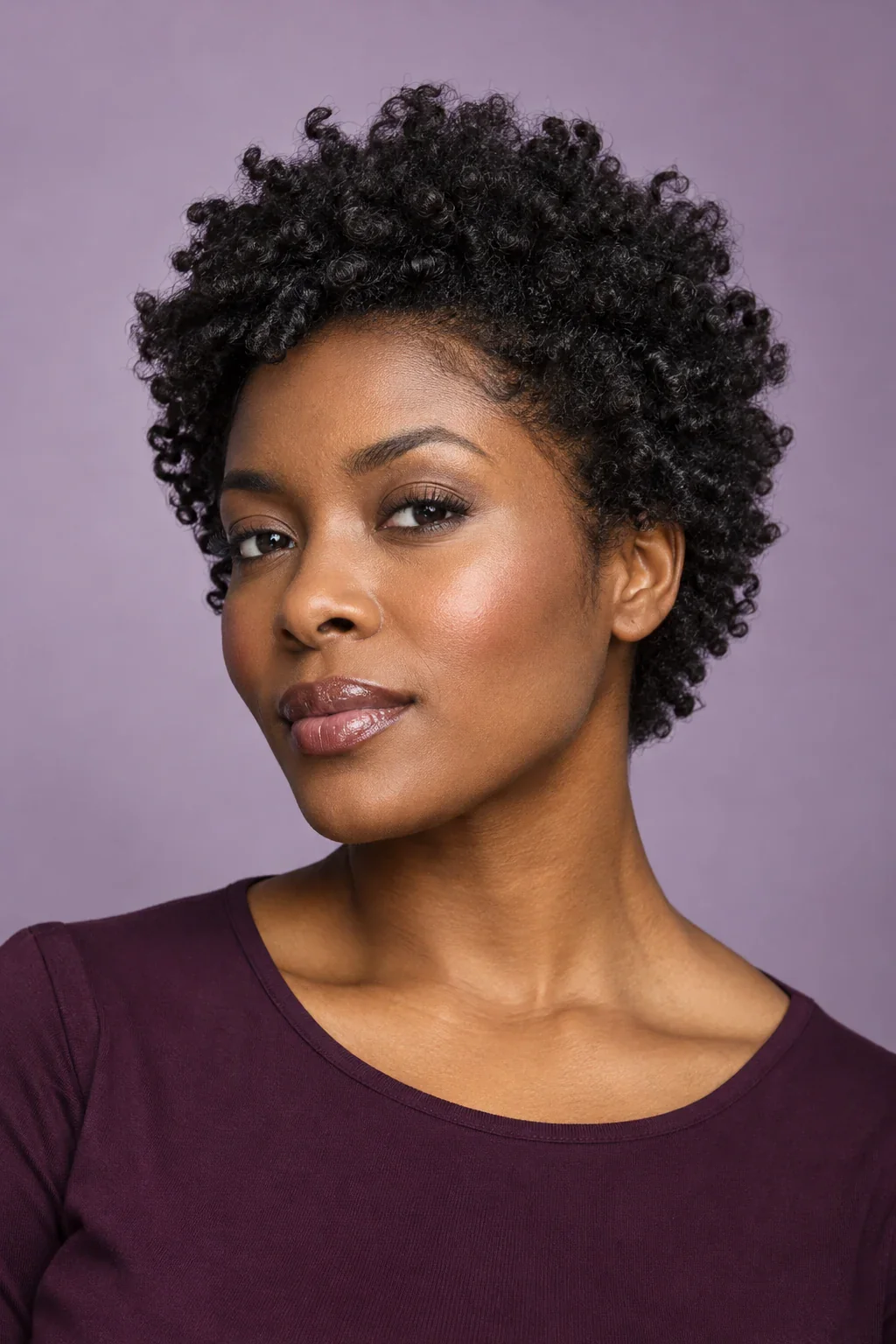
- Dry length
- Measured in the finish you wear
- Main detail
- Balanced height, width and perimeter
- Daily question
- How much variation do you like across styling states?
- Grow-out focus
- Preserving the intended outline
- Ask about
- The difference between shrunken and stretched shape
Name the styling state first
The same coily hair can have very different visible lengths when worn in its natural shrunken state, a stretched finish or a twist-out. Begin the haircut conversation with the finish you use most. A rounded reference is only useful when you and the stylist understand which state it represents.
Use shape language rather than a strict hair-type label. Describe whether you want more height, less width at a particular area, a fuller nape or an open outline around the ears. Coils are not uniform from section to section, and your preferred silhouette does not have to be a perfectly even circle.
Keep length choices conservative where spring varies
Show how the front and crown settle on an ordinary dry day. If the shortest front section matters for comfort, make it a separate boundary in the brief. A stretched piece that appears long enough may sit much higher when released. The stylist needs to assess that behavior in person.
Discuss the alternatives you still want to wear. A shape optimized for a defined natural outline may look different stretched out. That is not automatically a flaw, but it is useful to know before the cut. Ask which balance fits your priorities rather than expecting every styling state to share the same edge.
Make the illustration serve your actual hair
A generated portrait can communicate a preference for height or width. It cannot measure your density, predict shrinkage or prove that a pictured level of definition is reproducible. Discard previews that change those features in a way that hides the real decision.
For the salon, bring photographs of your current hair in the finish you use and a reference for the general silhouette. Ask how the shape will be checked after cutting and which areas should be preserved during future reshaping. That produces a plan tied to your hair rather than a demand to replicate someone else’s pattern.
Say what you mean.
I usually wear my hair in this styling state. I want this balance of height and width, with the front dry length protected. Please discuss how the outline changes when stretched and how you will check the finished shape.