
The scissor taper.
A softer transition, with the top left negotiable.
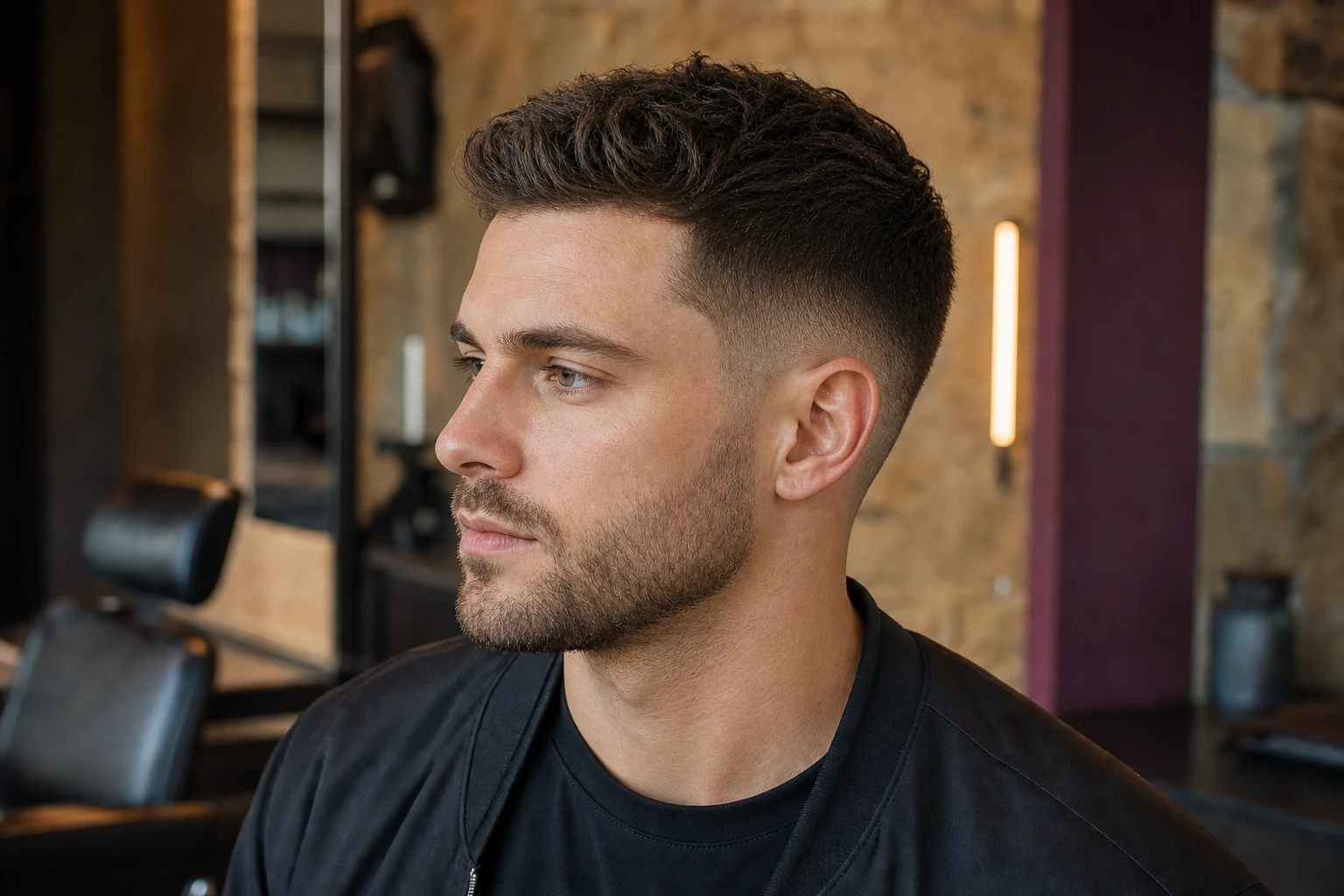
- Dry length
- Short sides, variable top
- Main detail
- A gradual reduction in length
- Daily question
- How close do you want the outline?
- Grow-out focus
- Keeping side width in proportion
- Ask about
- Scalp exposure, ears and neckline
Specify the contrast rather than only the tool
Scissor taper describes a gradual change in length often made with scissors, but the tool name alone does not define the finished shape. Show how softly you want the sides to connect and how much coverage you want near the ears. A reference with very close lower sides may be asking for a different contrast than you intend.
Talk about the top separately. You can keep enough length to use a natural wave, sweep the front or wear curls while asking for a tidier side silhouette. The practical question is how those lengths connect around the head, especially where growth directions or density change.
A softer outline still has upkeep
A gradual transition may feel comfortable as it grows, but it still changes shape. Decide whether side width, an untidy neckline or the front dropping lower is the first thing you notice. Ask your barber or stylist what a small tidy-up would include and what could remain untouched.
On curls, the dry pattern can change the apparent taper. A section that looks long under tension may sit much closer when released. Ask to assess the natural dry outline and explain whether you usually wear the top defined, loosely shaped or stretched.
Preview a range of side coverage
Compare a softer taper and a closer fade with a similar top. Use the same photo, part and shade. Look at the area around the temples and ears rather than allowing a new hairstyle on top to dominate the comparison.
For the appointment, name the amount of scalp visibility you are comfortable with and bring a side-view reference. Avoid treating a clipper guard number from a photo as an exact prediction for your own hair. Density, contrast against skin and the transition above it all influence the result.
Say what you mean.
I want a gradual, softer taper with this amount of coverage around my ears. Keep enough top length for my natural pattern and check the dry side profile before making the lower section closer.