
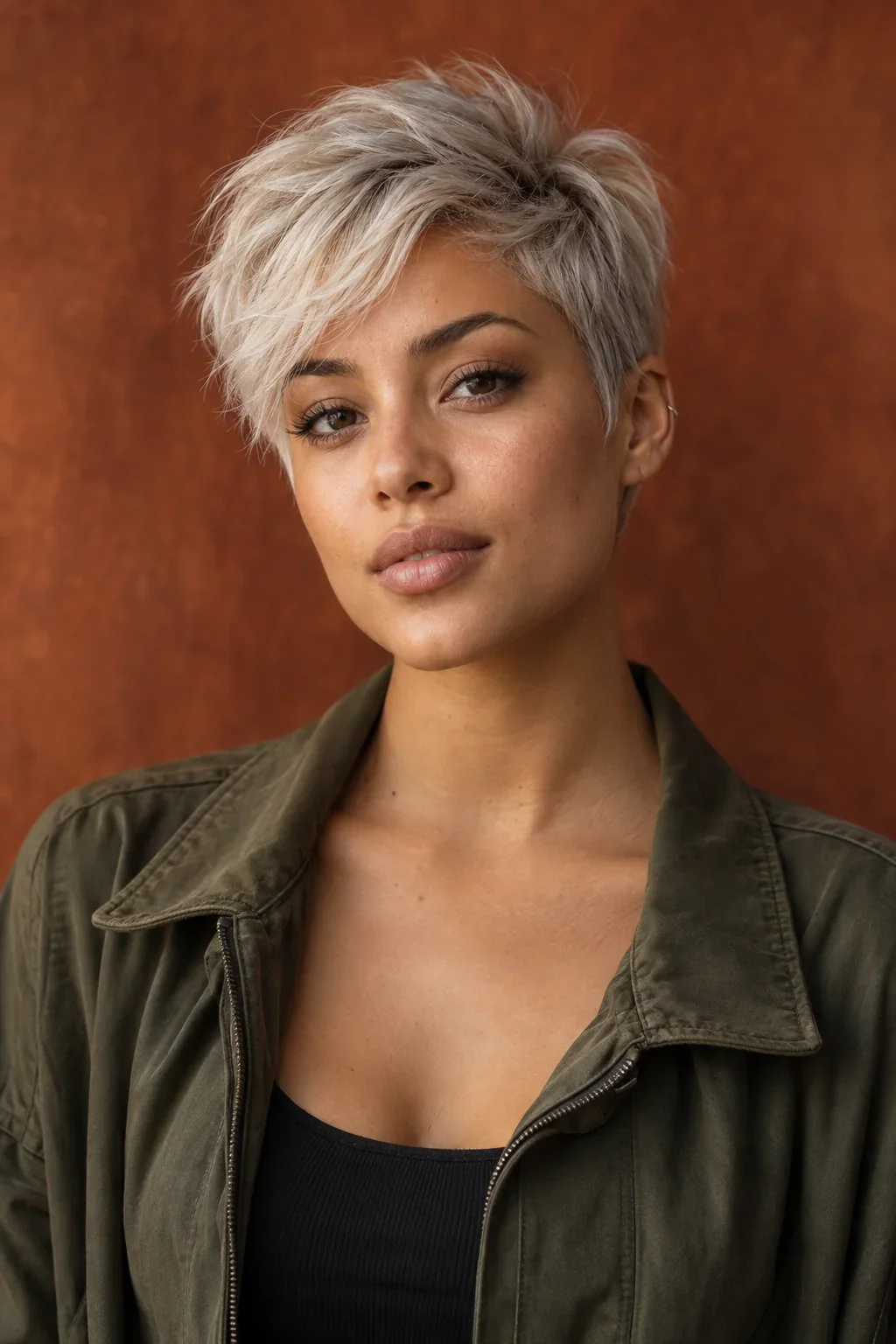
- Let the top and sides catch up before removing their length.
- Ask for an outline adjustment rather than a repeat pixie cut.
- Choose an intermediate shape you would actually enjoy wearing.
Start with the destination, not the calendar
Growing out a pixie is a balance problem before it is a length problem. The hair at the nape can look long while the sections above your ears still look cropped. That contrast may create a mullet effect even when every section is growing normally. Decide whether your next destination is a rounded bixie, an ear-length bob or simply a softer pixie. Each destination asks you to preserve different pieces.
Take a front, side and back photograph with your usual texture. Mark the parts you want to keep growing and the part that makes the outline feel accidental. This makes a consultation more precise than asking to “tidy everything up,” which can lead to losing the very length you need.
Treat the nape as a separate decision
If you do not want a longer tail, discuss reducing only the surplus at the lower neckline while leaving the crown and sides alone. A stylist can assess whether the shape needs a cleaner edge, a softer graduation or no cutting yet. The goal is visual balance, not maintaining an identical nape every week.
Avoid using a fixed appointment interval as proof that you are growing the cut correctly. Your starting cut, hair behavior and preferred silhouette all matter. A good check-in question is whether the next adjustment gets you closer to the intermediate shape, rather than merely making the old pixie look fresh again.
Get through the ear-length stage
The sides can be most irritating before they become long enough to tuck securely. Test a small clip, a soft headband or a slightly different part before deciding that the sides need shortening. A flat tuck may expose a shorter underlayer; a looser tuck can look softer and avoid emphasizing the contrast.
If glasses are part of your routine, try the tuck with your frames on. Hair that stays in place without glasses may flip around the arms of a frame. A useful temporary style must survive the accessories you actually wear, not just a mirror check in the bathroom.
Let texture change the plan
Straight hair may make the length difference at the nape very visible. Waves can make the same outline look softer, but may create extra width beside the ears. Curls can hide or exaggerate uneven lengths depending on how they settle. Show the stylist your dry, ordinary hair rather than only a carefully smoothed reference.
Ask which length should be judged when dry. Do not stretch a curl and use that stretched position as a promise of its everyday outline. A grow-out plan that keeps the right weight in the right place can be more useful than repeatedly taking bulk out of every section.
Use one controlled styling experiment
Try directing the front to one side while leaving the back simple. On another day, test a flatter front with slightly more movement at the crown. Keep the haircut unchanged so you can identify which styling choice improves the balance. You are looking for an easy transitional habit, not a completely new routine with several products.
If styling the nape into place takes longer every morning, write that down. It may justify a small outline adjustment. If a clip solves the issue comfortably, you may prefer to keep the length. Both choices can be sensible; the useful measure is what makes the transition wearable for you.
Make the next appointment measurable
Bring the progress photos and name one feature that needs attention: “The nape feels longer than the sides, but I want the sides to reach my ears.” Ask your stylist to show which pieces would be cut before starting. This is especially useful if you are visiting someone who did not create the original pixie.
Leave with a description of the next milestone, such as a side section that can tuck or a crown that connects into a bixie. A milestone describes a visible outcome without promising a growth speed. Keep the plan open to revision if you discover you prefer the intermediate cut.
Preview the intermediate cut, too
A long-hair preview can make the journey feel abstract. In Hair Muse AI on iPhone or iPad, compare a longer pixie and a bixie on the same photo before considering a bob. Look at side coverage and fringe length, while remembering that an image does not predict how the back will grow or your texture will settle.
Save the preview as a conversation aid. Pair it with your real side and back photographs so your stylist can separate the desired appearance from what your current lengths can achieve.
Example: the back is long but the ears still feel exposed
Suppose the nape now touches your collar, while the side sections barely cover the tops of your ears. You dislike the long-back impression but want a bob eventually. Cutting every section to look freshly cropped would reduce the contrast, yet also remove side length that the bob needs. This is where a deliberately narrow appointment brief helps.
Ask the stylist to show the small part of the nape that creates the unwanted tail. Then ask what happens if it is softened while the sides stay untouched. Compare that with leaving the back and wearing a shaggier interim cut. The decision is about your preferred outline during the transition, not about one option being the correct way to grow hair.
If the nape is adjusted, photograph the new outline before leaving. Keep that image as a record of the intended balance. At the next visit, you can discuss the next useful change instead of automatically repeating the same adjustment.
Example: a fuller bixie begins to feel better than the original goal
You may start the grow-out wanting shoulder-length hair and discover that a longer front with fuller sides gives you exactly the softness you missed. Treat that reaction as useful information. The intermediate cut is not merely a waiting room for the hairstyle you first imagined.
Try wearing the fuller shape for the activities that matter: putting on glasses, walking outside and resetting the front after sleeping. If it feels convenient, ask what maintaining this bixie would involve. Compare that upkeep with continuing toward a bob. You can make a fresh decision based on experience rather than feeling committed to an old destination.
Name the specific feature you want to keep, such as the longer temple pieces. This prevents a maintenance appointment from quietly returning the haircut to the shorter pixie you had before.
What to record between appointments
Use three short notes rather than a daily diary. First, record the section that is becoming easier: a side now tucks or the front can sweep without falling back. Second, record the section still causing inconvenience. Third, record what you do to manage it and whether that solution feels reasonable.
These notes show progress even when a front photograph looks similar. They also reveal if your styling effort is increasing in one area. If a clip remains comfortable, keeping the length may be sensible. If the nape repeatedly needs work you dislike, a shape review may be worth arranging.
Bring the notes with one consistent side photograph. Ask for a decision about the specific problem area and keep the growing sections identified. This makes each appointment serve the transition instead of treating it as a general refresh.
A starting brief.
I am growing toward a bixie or short bob. Please preserve the top and sides, assess the dry outline, and show me any nape length you suggest removing before cutting.Make it your own
Questions, answered.
01Do I have to cut the back while growing out a pixie?
No. Keeping the back can suit a shaggier transition. If you want a compact shape, discuss adjusting only the nape while preserving the top and sides. The choice depends on your target outline.
02Will trimming make my pixie grow faster?
An outline trim changes the shape; it does not make the remaining hair grow faster. Ask which adjustment improves the transition and how much length it removes.
03What is a useful halfway haircut?
A bixie can connect a longer top to fuller sides, but it is not a required stage. Choose an intermediate cut that fits your texture and routine rather than copying a fixed timeline.
A note on this guide
Written for haircut and color planning by CutChapter editorial, from the publisher of Hair Muse. Suggestions are context-dependent editorial guidance, not an in-person assessment. Color changes need a professional feasibility and safety discussion. Read our editorial policy.