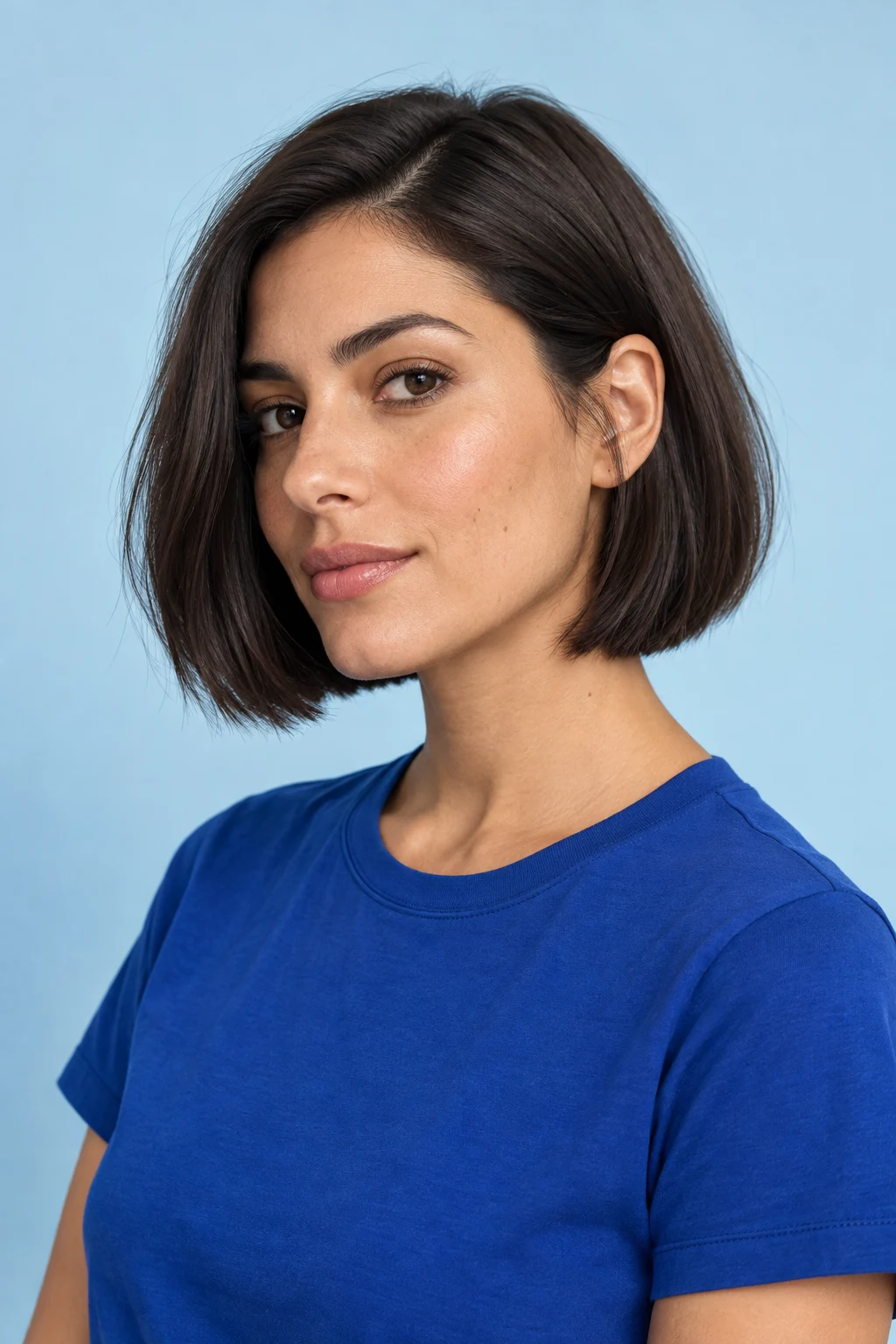
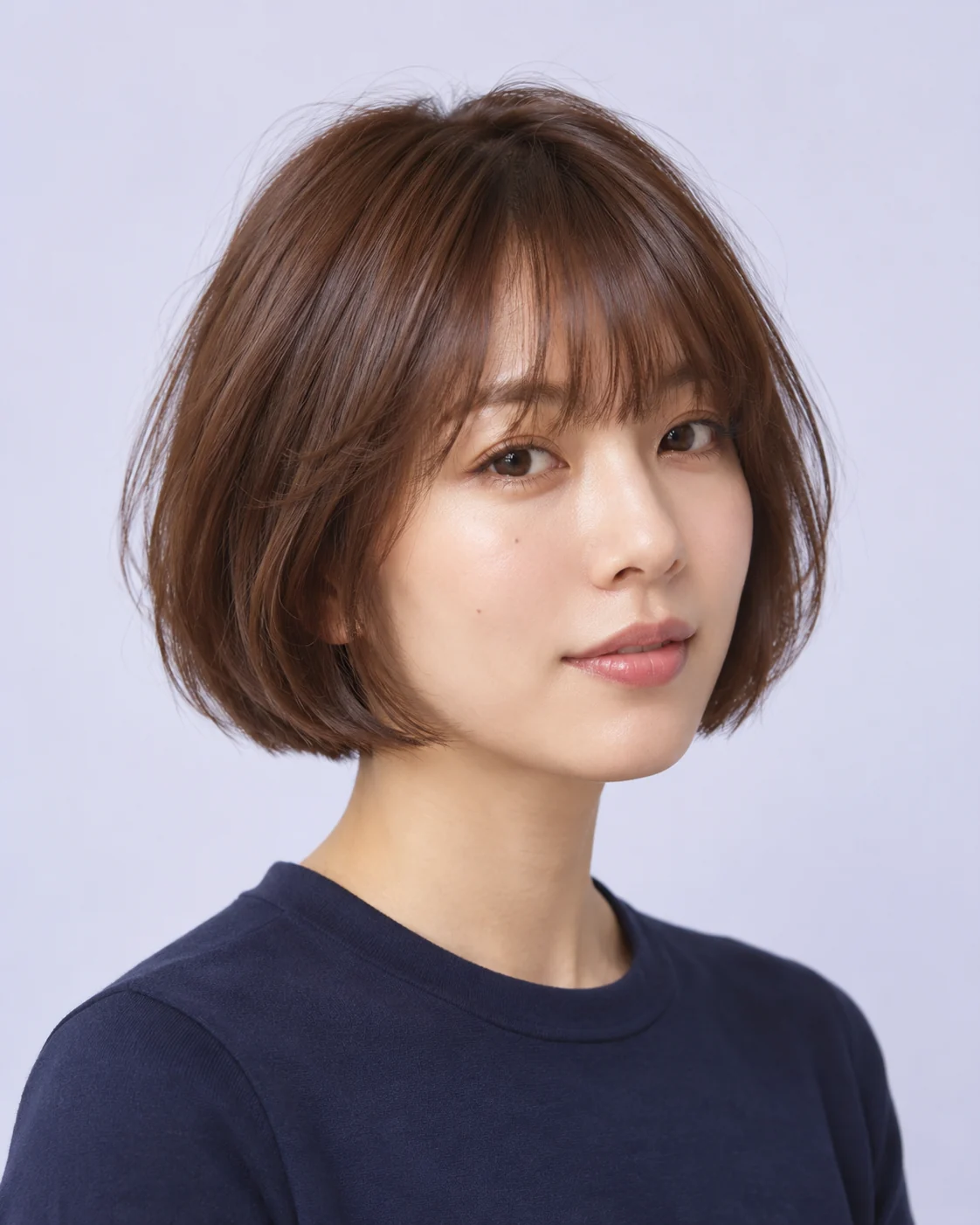
- French and Italian bob labels vary between salons and reference images.
- Discuss the dry length and perimeter rather than relying on a country name.
- A fringe and a blowout are separate choices from the bob itself.
Start with the pictures, not the passport
A French bob is often shown short, relaxed and sometimes paired with a fringe. An Italian bob is often shown fuller, slightly longer and styled with a generous sweep or movement at the ends. Those are common visual associations rather than fixed haircut standards. One salon's French bob may overlap with another salon's Italian bob, so the names alone are an unreliable brief.
Put your references side by side and identify the real differences. Is one above the chin while the other sits below it? Does one have a solid rounded edge while the other has separated texture? Is the distinction mainly the fringe or the styling? Once those features are named, you can discuss the look without needing the stylist to interpret an ambiguous trend label.
Compare the working details
| Decision | French bob | Italian bob |
|---|---|---|
| Common reference length | Often compact, around the jaw | Often fuller and somewhat longer |
| Typical visual association | Relaxed texture; fringe is common | Substantial edge; rounded movement is common |
| Main ambiguity | How short and how textured? | How much fullness comes from a blowout? |
| Useful request | Specify dry length and front shape | Specify perimeter weight and finishing routine |
The dry landing point changes the feeling
A shorter bob can expose more neck and create a compact outline near the jaw. A longer version can provide more room for tucking or gathering and may feel less abrupt if you are coming from long hair. Neither length is inherently more flattering. The useful issue is how the hair interacts with your ears, jaw, neck and shoulders when it moves.
Ask the stylist to demonstrate the proposed length on your dry hair. Pay particular attention to the front corners, which may feel much shorter when tucked or curled than they did in the reference. If your chosen image has a strong inward bend, explain whether you intend to style that curve or would prefer an outline that works with your natural finish.
Fullness is not the same as bulk
The fuller Italian-bob effect often comes from the relationship between the perimeter and the way the hair is arranged. A substantial lower edge can look deliberate, while a controlled blowout can create a broad, rounded silhouette. If your hair is naturally dense, that fullness may need careful planning so it remains comfortable around the sides. If your strands are fine, the reference's abundance may not be reproducible through the cut alone.
A French-bob reference may appear lighter because of texture, shorter length or a less polished finish. Do not assume it has been extensively thinned. Ask which parts of the reference reflect the haircut and which are the result of styling or natural density. You can borrow the outline while adapting the fullness to your actual hair.
Decide about the fringe independently
A fringe can make a short bob read immediately as a French-bob reference, but you do not have to add one to use a similar perimeter. Conversely, a longer, fuller bob can be paired with curtain bangs or another front shape. Combining decisions casually can turn a manageable length change into a much larger routine change than you expected.
Before committing, consider how your forehead hairline behaves, whether you wear glasses and how you prefer to keep hair off your face. A fringe may need attention on days when the rest of the bob looks fine. If the bob is the part you want, ask to compare it with your existing front first. The fringe can remain a separate decision with its own benefits and maintenance costs.
Natural waves can soften either version
Both references can work as starting points for wavy hair, but neither predicts the shape of your wave pattern. A short outline might lift some sections and leave others straighter. A fuller lower edge might encourage an attractive bend or create more width than you expected. Let the stylist assess your real texture before agreeing to a length based on a styled photograph.
Bring an image of your hair on a normal day and describe how often you use heat. If you want a relaxed finish, show where you are comfortable with outward bends and uneven movement. If you want the rounded, glossy curve in a reference, ask what work produces it. There is no problem choosing a styled look, as long as the routine is part of the decision.
Think through the ear tuck
A tuck changes the proportions of a bob by opening the side of the face and exposing more neck. Some short versions are designed to sit around the ear rather than behind it. Some longer versions tuck easily but spring free because of layers, density or growth direction. A reference with one tucked side may be selling you a styling gesture more than a particular national-bob category.
Test the intended front length at the appointment. Explain whether you need a reliable tuck during work or simply like its appearance in photographs. Those are different requirements. You may prefer a slightly longer front or a different side shape to preserve the practical use, even if that shifts the finished cut away from the exact reference name.
Match the cut to your tolerance for precision
A short perimeter can feel striking because the length looks intentional. That means small changes in where it lands may alter the whole effect as it grows. A fuller, longer outline may offer a more forgiving transition, although it can still need reshaping to preserve its balance. Ask about the point at which each proposed version will look like a different cut.
Choose a maintenance trigger you can recognize. You might rebook when the hair stops clearing your collar, when the fringe blocks your glasses or when the front no longer turns the way you enjoy. This is more useful than assuming that a French bob is always high maintenance or an Italian bob always grows out easily. Individual versions vary too much for those rules.
Try two versions without changing the color
In Hair Muse AI for iPhone and iPad, compare a compact bob with a fuller, slightly longer one using the same photo. Keep color similar and avoid adding a fringe to only one version at first. This allows you to judge the neck exposure and weight beside your face without several simultaneous changes competing for attention.
Then, if you want a fringe, run it as a separate visual idea. Treat the resulting images as a conversation aid. AI previews cannot verify your true density, predict the dry curve or tell you whether a tuck will hold. Your best reference set combines the conceptual images with photographs of your own hair and a short list of non-negotiable habits.
When two references appeal for different reasons
Imagine that you like a French-bob photograph because it exposes the neck, but you dislike its short fringe. You like an Italian-bob photograph because the edge looks substantial, but you do not want its polished rounded blowout. Neither complete image is the actual goal. Your preferred combination is a compact, full-looking perimeter with your current open front and a relaxed natural finish.
Bring both images and name those three features explicitly. Ask whether your density and texture support that combination and where the dry length should land. The stylist may use a different salon label for the result, which is fine if the visual agreement is clear. You can also ask what happens when the hair is tucked, since the open-neck effect may change considerably. If the proposed cut needs a daily styling task you do not want, adjust the outline rather than pretending the reference is naturally effortless. This approach avoids choosing one national-bob name and then expecting the stylist to infer which parts you silently rejected. It also makes the final result easier to evaluate: the neck exposure, substantial edge and familiar front were the agreed priorities, regardless of what the finished haircut is called.
Build your own bob instead of following the label
You might prefer the short length in a French-bob reference, the solid perimeter of an Italian-bob reference and your existing side part. That combination is a valid brief. A stylist does not need to reproduce every feature of a trend photograph for the result to make sense. In fact, selecting features deliberately often produces a more wearable outcome.
Write down three priorities before the appointment: the shortest dry length you accept, the amount of front hair you want and the finish you will realistically maintain. Add one limit, such as no daily round-brush styling or no fringe touching your frames. The resulting conversation is more precise than asking for a look that is French but not too French, or Italian but not too full.
A starting brief.
I like the compact length of this French-bob picture and the substantial edge of this Italian-bob picture. I want to keep my natural part and decide about a fringe separately. Please show me what will work with my usual texture.Make it your own
Questions, answered.
01Does a French bob have to have bangs?
No. A fringe is common in references but is not compulsory. Compare the bob perimeter with your current front before adding a separate fringe decision.
02Is an Italian bob better for thick hair?
It can suit someone who enjoys a full outline, but density and internal shape still need assessment. Ask how the stylist would balance fullness and comfort around your sides.
03Can I combine elements of both?
Yes. Ask for the length, edge and front details you like from each reference. The finished cut should be described by its actual features rather than a strict trend name.
A note on this guide
Written for haircut and color planning by CutChapter editorial, from the publisher of Hair Muse. Suggestions are context-dependent editorial guidance, not an in-person assessment. Color changes need a professional feasibility and safety discussion. Read our editorial policy.