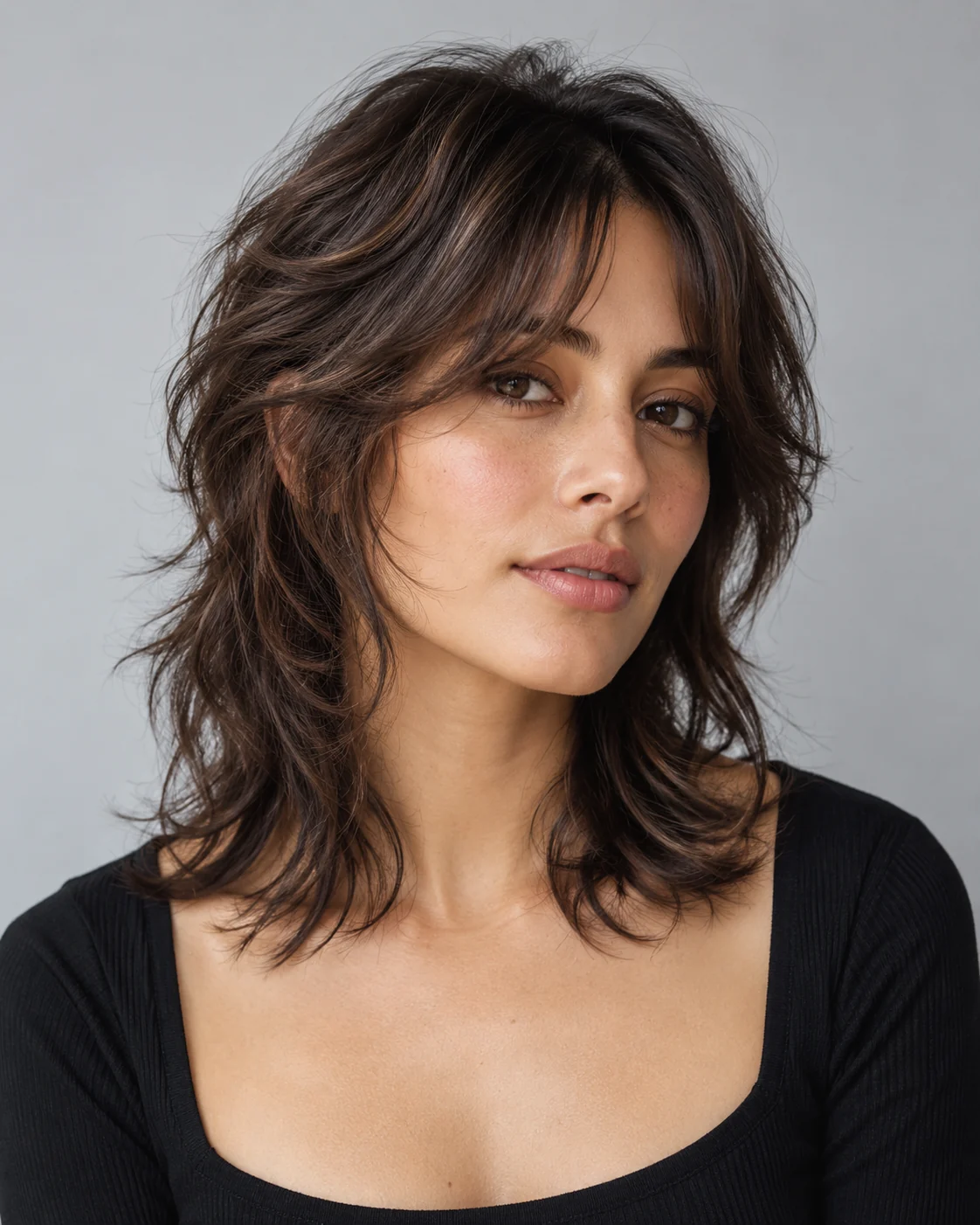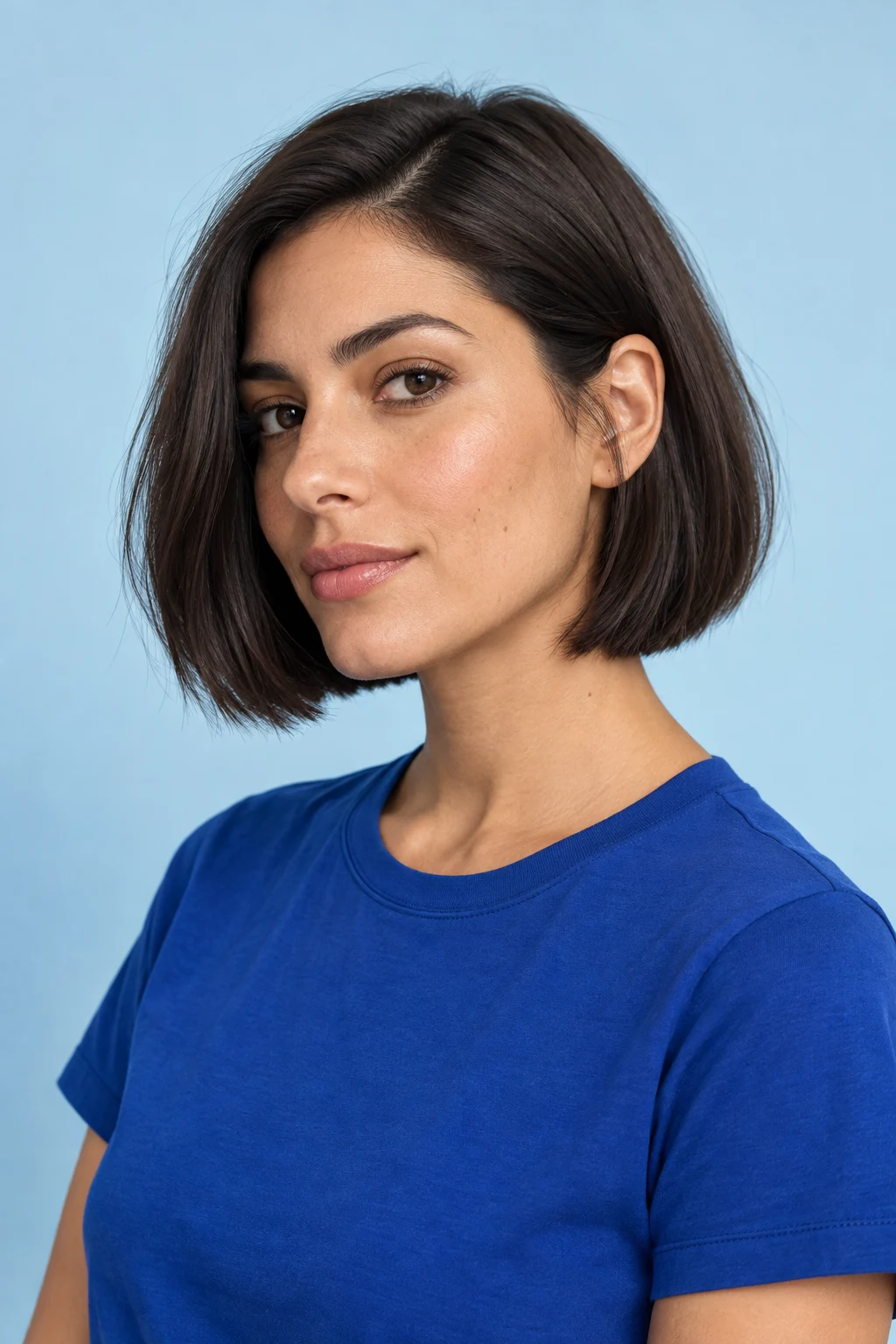
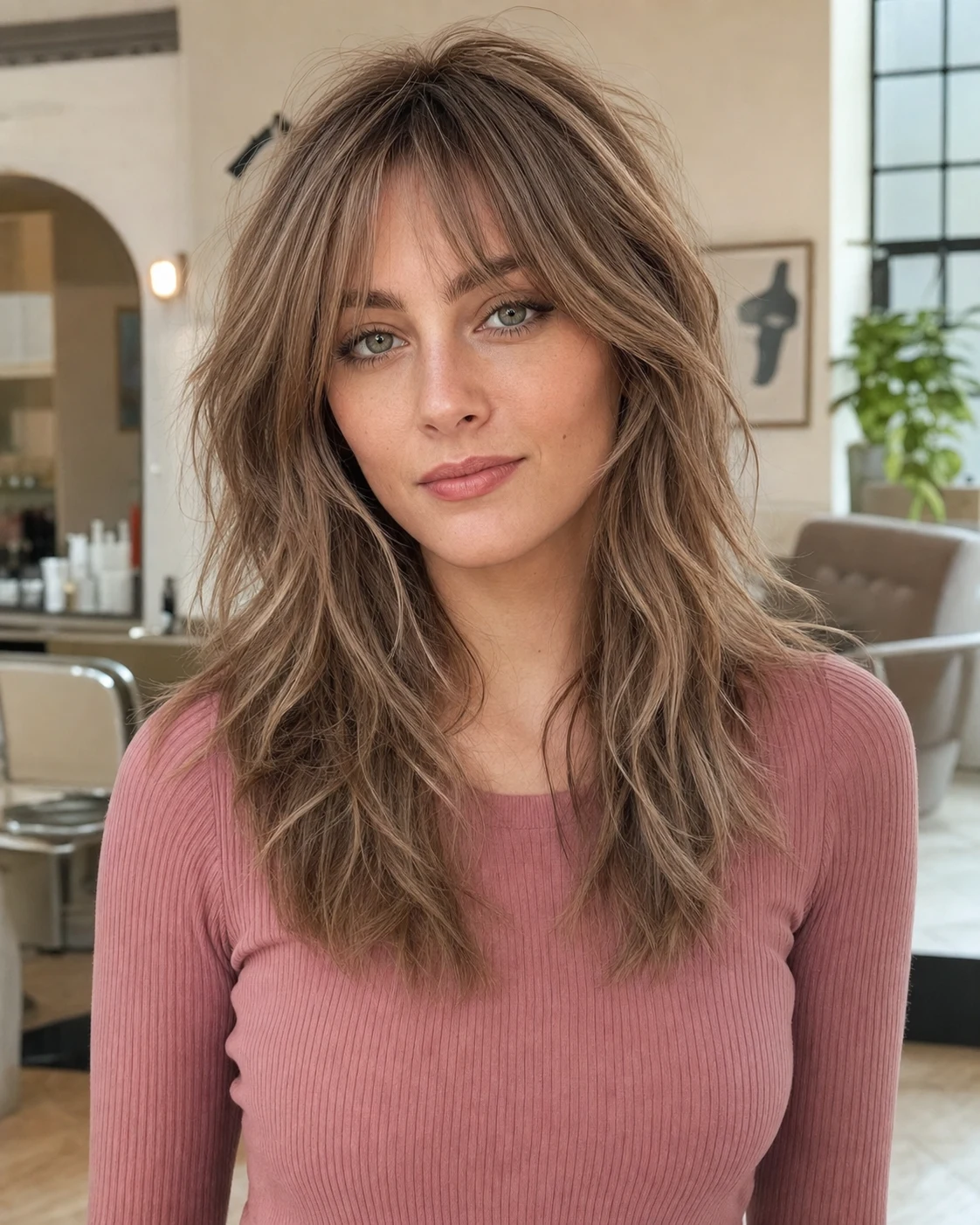
- Choose the shape from dry hair before discussing a polished finish.
- Mixed wave patterns deserve a plan rather than forced symmetry.
- A useful air-dry cut still needs practical containment and a reset option.
Look at the haircut you already have without disguising it
Before your appointment, take a few photographs after your usual wash-and-dry routine. Include the front, both sides and the back, and avoid pulling your hair straight to make the pictures match. The differences are useful evidence. One side may form a stronger S-shaped bend while the other remains looser, and the underneath may sit shorter than the surface once dry.
Write down what you like about this natural finish before listing what you want to change. Maybe the lower waves are excellent, but the front is too heavy. Perhaps the crown is comfortable while the ends spread across the shoulders. Keeping a successful section can make the change more predictable than replacing the entire outline because one area is difficult.
Separate the haircut from the styling in a reference
A beachy bob photograph may show naturally arranged waves, a diffused finish, a full blowout with a wand, or a combination. You cannot always tell by looking. Use references to identify shape: where the shortest pieces end, how much hair sits near the jaw and whether the perimeter is compact or open. Then ask how much styling produced the visible texture.
Bring at least one reference that looks a little less polished than your favorite. If you still like its silhouette, that is a helpful sign that the haircut interests you beyond its finish. A low-effort plan should not require you to recreate a controlled salon wave pattern every morning. Your own waves can be looser, uneven and still entirely compatible with a good shape.
Compare a longer outline, a lob and a bob
A longer outline lets the waves travel through more length and keeps gathering options. Selective layers can change how movement appears without replacing that familiar structure. A lob makes the lower shape more visible but introduces shoulder contact, which may create flips or change the way the final wave turns. A bob puts more of the focus on the head-and-neck outline and can expose differences between sections.
These are starting points rather than a ranking from easiest to hardest. If your hair already forms a comfortable shorter wave near the cheek, a bob might be simple to wear. If your waves need some length before they become visible, keeping more length may feel more natural. Ask the stylist to explain the likely trade-off on your hair instead of choosing solely from the haircut label.
| Natural behavior | A useful discussion | Question to ask |
|---|---|---|
| Waves appear mainly through the lower lengths | Keep enough length for the pattern you like | What movement would remain after shortening? |
| One side turns out at the shoulder | Choose a clear landing point | Should the ends finish above or below this contact? |
| The underneath springs up more strongly | Allow for different dry positions | How will the back sit after my normal drying method? |
| The front dries straighter than the back | Keep the front deliberate without forced curls | Can the face framing work with this looser section? |
Decide how much layering supports your pattern
Layers can give waves more room to move, but adding more is not an automatic route to an easier routine. A shorter top section may produce lift, a distinct bend or an unexpectedly straight piece, depending on the hair. If you like a full lower edge, explain that preservation goal before asking for a wave-friendly cut.
The shortest layer matters more than a general promise of soft layers. Ask the stylist to point to its expected dry position and show how it connects to the rest. If the reference has obvious crown movement, ask whether your natural pattern can produce something similar without setting that area. A subtler change may be the better match if your aim is less handling rather than a more dramatic silhouette.
Treat front pieces as a separate maintenance decision
A cut can air-dry comfortably through the back while a fringe demands daily attention. Cowlicks, glasses and the way the hair parts across the forehead can make the front behave differently from the lengths. Decide whether you are happy to reset that section or whether every front piece needs to work with a clip or tuck.
You can retain a longer face frame and still get a meaningful haircut change. Start the shortest piece where it can cooperate with your normal routine. If you want curtain bangs, compare the air-dried front with the rounded, swept-away version shown in many references. The latter may be an optional styled variation rather than the everyday shape your hair produces on its own.
Agree on what air drying means in your routine
Some people arrange wet hair carefully and leave it untouched; others need to wash quickly, commute and move around while it dries. Some use a light styling product; others prefer a simpler routine. Describe your actual version. The haircut plan should fit the circumstances in which the hair dries, not an idealized quiet hour in a warm room.
Tell the stylist if you normally part the hair while wet, change the part later, or brush through the waves once dry. These habits affect the finish you will see. Ask for a demonstration that uses steps you are willing to repeat, with enough explanation to understand their purpose. If the routine includes several new steps you do not want, discuss a less demanding shape before the appointment ends.
Check the outline before a polished finish
If possible, ask to see the resting dry shape before it is refined into a highly finished style. This can reveal shoulder flips, a difference between sides or a shorter piece that does not join the outline. Your stylist may still need to dry and finish the cut professionally, but the natural resting position should be part of the discussion.
Put on the accessories you wear frequently. A headset can flatten a crown; glasses can interrupt the front; a collar can lift the ends. Turn your head and tuck one side. You are checking the haircut in motion, not looking for perfectly matched curls. The successful version remains understandable even when individual waves are arranged differently.
Give the first home wash a fair test
Use a familiar wash and styling routine for the first check. Changing the cut, shampoo, product amount, drying position and part at once makes it harder to know why the result looks different. Photograph the fully dry outline and note any area you keep touching. Wait until the hair is dry before deciding that a wave has failed to form.
Look for patterns over more than one wash. Weather, time available and handling can change the finish. A repeated structural issue is more useful to report than a single uneven wave: the same front piece blocks your eye, the nape always appears much shorter, or the ends keep catching one shoulder. These descriptions help your stylist decide whether a small refinement could improve the shape.
Keep an ordinary-day fallback
Even a well-chosen air-dry haircut benefits from a plan for days when the pattern feels different. That might be a half-up clip, a low gathering point, an ear tuck or a deliberate change of part. Choose a fallback you like visually instead of treating it as a rescue that makes the haircut feel unsuccessful. Confirm that the shortest sections can participate.
You can use Hair Muse AI on iPhone or iPad to compare the visual weight of a wavy bob, lob or longer layered outline. It can help you decide whether you prefer an open neck or a longer frame, but it cannot test your real drying behavior. Bring the image together with your own natural-texture photographs and ask the stylist to adapt the idea to the hair you have.
A starting brief.
I want a haircut chosen for my normal air-dried waves. Please look at these front, side and back pictures and assess the mixed sections before choosing the length. I like natural movement and do not need identical waves. I want the front to work with my usual part and a simple clip or tuck, with no required full blowout.Make it your own
Questions, answered.
01Will an air-dry cut remove all frizz?
No haircut can promise a completely uniform surface in every condition. Here, air-dry means choosing a shape that works with your natural finish. Decide how much softness and irregularity you enjoy, and discuss a silhouette that does not depend on every strand sitting perfectly.
02Should wavy hair be cut wet or dry?
Different stylists use different approaches, sometimes combining them. Rather than prescribing a method, ask how the stylist will account for your dry movement and any mixed sections. Your natural dry photographs help make that discussion specific.
03Can I have an air-dry bob without bangs?
Yes. The front can remain longer and connect to the bob or tuck behind the ears. The main decisions are the dry length, the width you want and whether the front behaves comfortably in your usual part. Bangs are a separate choice.
04What if one side is always wavier?
Show the difference instead of stretching both sides to match. The stylist can discuss a visual balance that respects the natural pattern. Perfectly identical wave shapes may require styling, so choose whether that finish matters enough to become part of your routine.
A note on this guide
Written for haircut and color planning by CutChapter editorial, from the publisher of Hair Muse. Suggestions are context-dependent editorial guidance, not an in-person assessment. Color changes need a professional feasibility and safety discussion. Read our editorial policy.