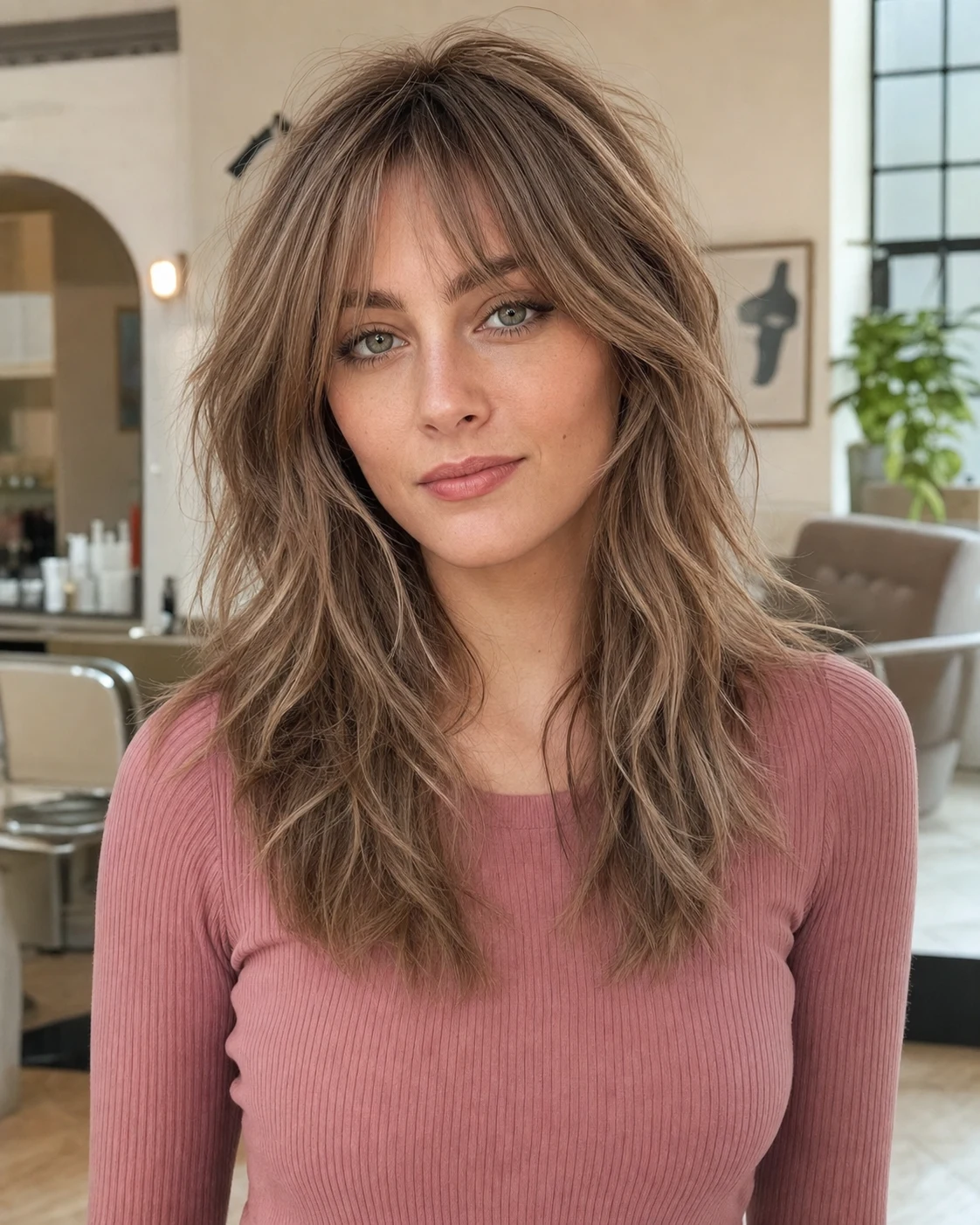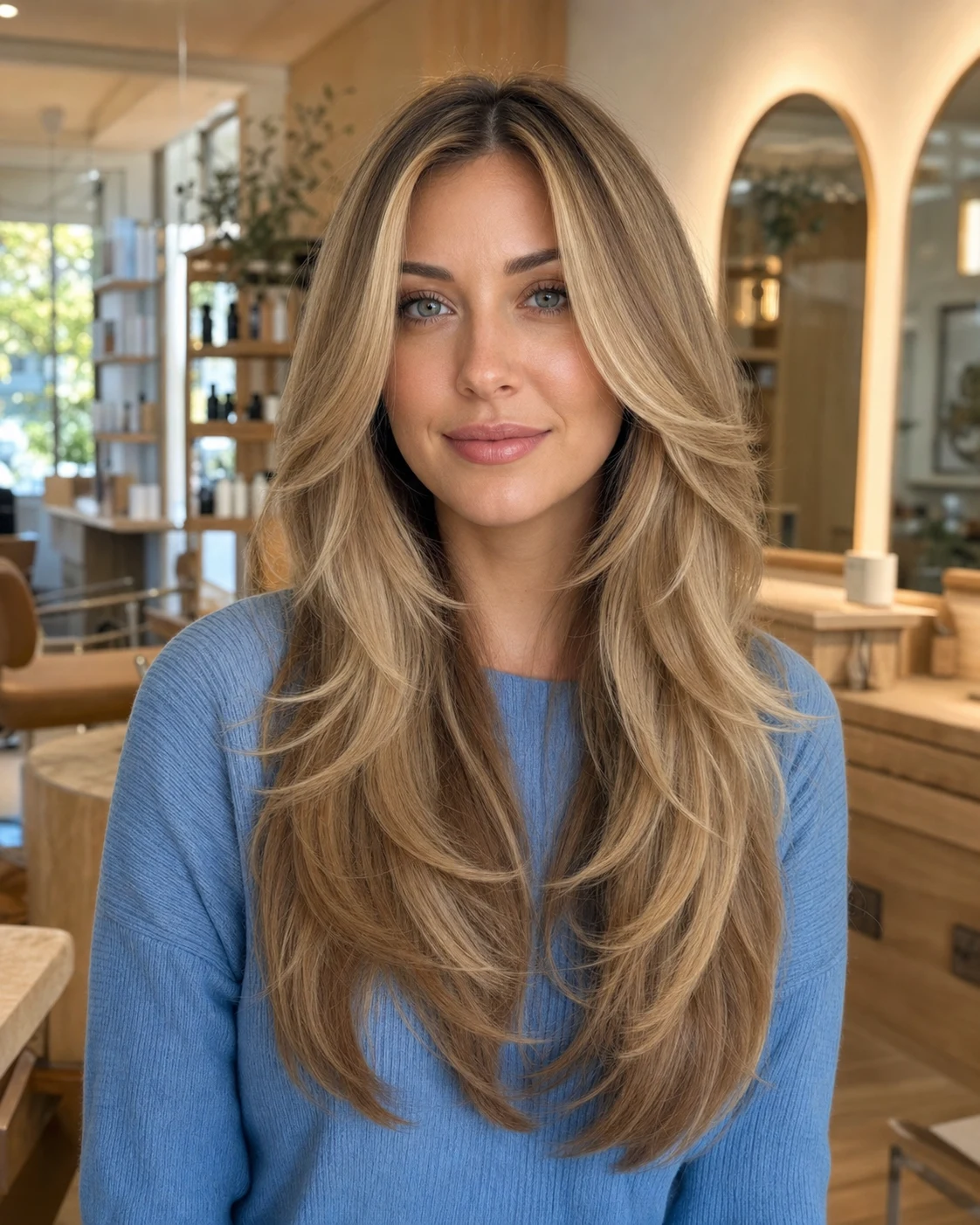
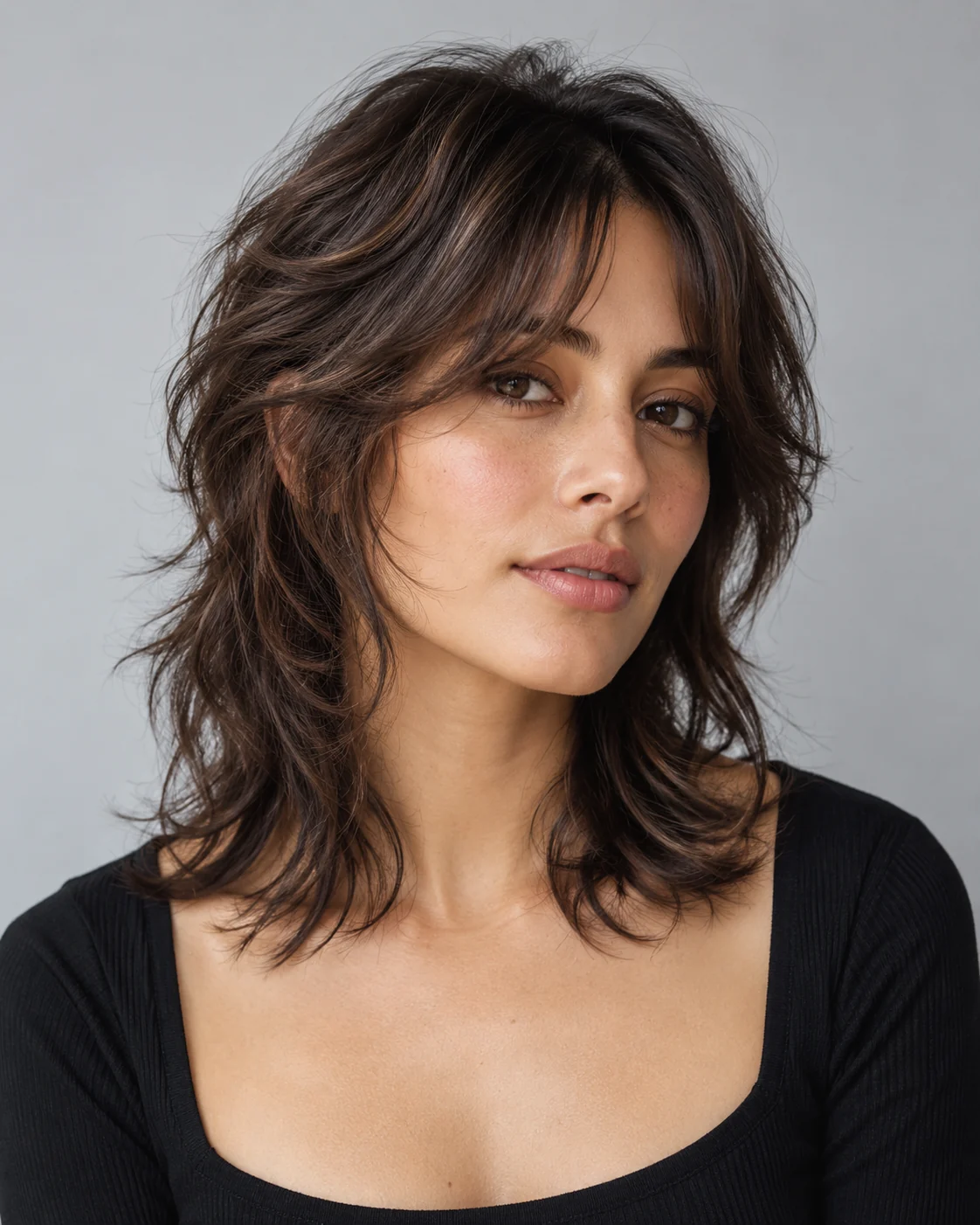
- Soft describes the amount of contrast, not a fixed haircut formula.
- Check the shortest crown layer in your natural dry pattern.
- A full lower edge and a dramatic wolf silhouette may compete for the same hair.
Use soft as a visual preference, not an instruction by itself
One person’s soft wolf cut may look like long layers with a more active crown; another’s may still have a pronounced difference between the top and back. Show examples and identify the contrast you want. Point to the upper shape, the side coverage and the longest lower section separately. That gives the stylist more information than asking for a trendy name with a gentler adjective.
Include a reference that is too dramatic for you. It can help define the boundary: the crown is too short, the sides are too open or the lower ends are too separated. A useful consultation includes what you want to preserve as well as what you want to add. This is especially helpful if you are attracted to the mood of the cut but unsure about its structure.
Assess the wave pattern at the crown
The top is a key part of the wolf silhouette. If your crown forms visible waves at a shorter length, layering may bring that movement into the outline. If it tends to lie straighter, the same cut may show shorter pieces without the lifted finish in the reference. Ask the stylist to assess that area dry and explain the likely everyday version.
Bring a side photograph after your normal routine. It shows whether the crown naturally has height, whether it separates near a growth direction and how it connects to the back. Do not assume that cutting shorter will automatically produce the desired lift. You may choose longer upper layers or a quieter shape if your goal is less styling rather than more visible structure.
Choose the side coverage
Some wolf references have a narrow side profile and a longer tail-like back. Others retain more fullness around the ears and jaw. Decide which relationship you like. If you tuck the sides or wear glasses, preserve enough useful length in that area. A short side panel may look open and light while also removing your familiar tuck.
Look at both a front and a side view. A cut that appears softly layered from the front can show a much stronger top-to-back contrast in profile. Ask to see how the intended front layer connects around the head. You should understand whether the shape will feel like a modest update or a distinctly different silhouette before cutting begins.
| Decision | Subtle direction | More committed direction |
|---|---|---|
| Top-to-back contrast | Longer crown and a connected transition | Shorter crown with a clearly longer back |
| Side coverage | Enough length around ears and jaw | A more open side silhouette |
| Lower edge | Fuller, less separated lengths | A lighter, narrower perimeter |
| Front | Long framing or an open forehead | A shorter fringe that becomes part of the daily routine |
Keep the perimeter you want
A wolf-inspired cut can draw on the lower lengths to create its layered contrast. If you want the ends to remain substantial, say that explicitly. Ask how much hair will still occupy the bottom of the outline after the crown and sides are shortened. Retaining the longest measurement does not automatically preserve the same lower-edge fullness.
This matters whether your hair has fine strands or a lot of density. The stylist should assess the available hair rather than choose from the label alone. You might decide that a softer shag or long layered shape gives enough movement with a stronger perimeter. That is a useful outcome if it better matches your preference; the name does not need to survive every practical adjustment.
Choose the front as its own feature
A short fringe can make the reference instantly recognizable, but it can also be the part that needs the most separate attention. Wavy front pieces may curl toward the eyes, separate at a cowlick or dry looser than the rest. Explain whether you want to reset that area each day or prefer longer framing that can tuck away.
A no-fringe or long-fringe adaptation is possible to discuss. Ask how it changes the balance between the crown and sides. You may need a less dramatic top so the open front still feels connected, or you may like a longer swept section. The practical starting point is where the shortest dry front piece can sit comfortably in your ordinary routine.
Compare air-dried and arranged movement
A wolf cut photographed in soft waves may involve drying direction, product, a brush or heated tools. Ask which part of the finish is natural and which part is constructed. If you prefer air drying, show your actual result so the stylist can discuss the outline it can support. The cut should not depend on a different wave pattern appearing by itself.
You can still keep a more polished version for occasional use. The key is to like the simpler baseline too. Try to identify whether your interest comes from the layer structure or from the extra texture in the photograph. If it is mainly the texture, a less dramatic haircut with an optional styling change may be a better first experiment.
Protect a usable fallback
Short crown and side sections can escape a ponytail or bun. Before the cut, demonstrate the gathering point you rely on and decide which pieces may remain loose. A half-up option can look deliberate with a layered haircut, but it is not equivalent to a secure all-hair tie. Be clear about the function you need for work, exercise or other activities.
If a few clips are acceptable, ask where they would sit. If they are not, preserve more length in the relevant sections and choose a softer silhouette. You do not need to treat practicality as the enemy of an expressive haircut. It is one of the factors that makes the final version personal rather than a direct copy of a reference.
Plan the grow-out before choosing the shortest layer
The shorter crown will need time to connect with the longer outline if you later want a quieter haircut. Ask what the transition might look like and which areas should be left to grow. A highly disconnected shape may ask for a different grow-out plan from a subtle adaptation. Knowing that in advance can help you choose the amount of contrast you are comfortable with now.
If you are uncertain, start with the softer version and assess it after your own washes. Look for the distribution of movement, not a perfect imitation of the reference. A later adjustment can increase the contrast if you decide you enjoy the direction. Taking the largest possible step immediately is not necessary to make the experiment meaningful.
A decision example: soften only the contrast you dislike
Imagine that you like a wolf-cut reference from the front but find the side view too sharply divided between crown and back. Instead of rejecting the whole direction, point to the transition you want softened. Ask whether keeping the crown longer and preserving more side coverage would retain enough movement. This gives the stylist a concrete adjustment to discuss rather than the ambiguous request to make everything a little less dramatic.
Before cutting, compare the lower edge too. If the softer top still leaves a very narrow back, the silhouette may remain more contrasted than you want. You can choose a fuller perimeter as part of the same adaptation. After washing, judge the relationship between zones rather than looking for every wave to match the photograph. A coherent, more connected shape can be the successful outcome even when it is less obviously labeled a wolf cut.
Use a preview to separate length from texture
Hair Muse AI on iPhone or iPad can help you compare the visual outline of a softer wolf-inspired cut and a longer layered shape. Keep the imagined color and wave size similar, then notice the crown, side coverage and lower edge. Save the version whose structure you like rather than the one with the most dramatic finish.
The image cannot predict how your crown will move or which pieces will reach your ponytail. Bring it with natural photographs and your preservation priorities. Ask the stylist to explain what can be adapted and what would require a different routine. A successful soft wolf cut is a version you can recognize and enjoy when your own waves dry in their ordinary way.
A starting brief.
I want a soft wolf-inspired shape with moderate contrast, not the shortest possible crown. Please assess my natural waves at the top and keep the side coverage and perimeter we have marked. I want the front to work with my usual routine and these gathering options. Explain the dry outline and likely grow-out before we decide on the shortest layer.Make it your own
Questions, answered.
01What makes a wolf cut soft?
Usually a less pronounced contrast between the shorter top and longer lower outline, with a more connected transition. The term is subjective, so show the crown, sides and perimeter you want rather than relying on the adjective alone.
02Can I have one without bangs?
You can discuss a longer front or open-forehead adaptation. The stylist may adjust the rest of the shape to keep it coherent. Decide whether the front needs to tuck or gather before agreeing to shorter framing.
03Will it work on loose waves?
It may, but the crown and surface pattern matter. Loose waves do not guarantee the lifted, separated finish in a reference. Ask to see how the proposed layers would look with your natural movement and your usual drying method.
04Is it easy to grow out?
That depends on the shortest sections and how disconnected the shape is. Ask which areas would need to catch up and what intermediate haircut could work. Choose the amount of contrast with that future transition in mind.
A note on this guide
Written for haircut and color planning by CutChapter editorial, from the publisher of Hair Muse. Suggestions are context-dependent editorial guidance, not an in-person assessment. Color changes need a professional feasibility and safety discussion. Read our editorial policy.