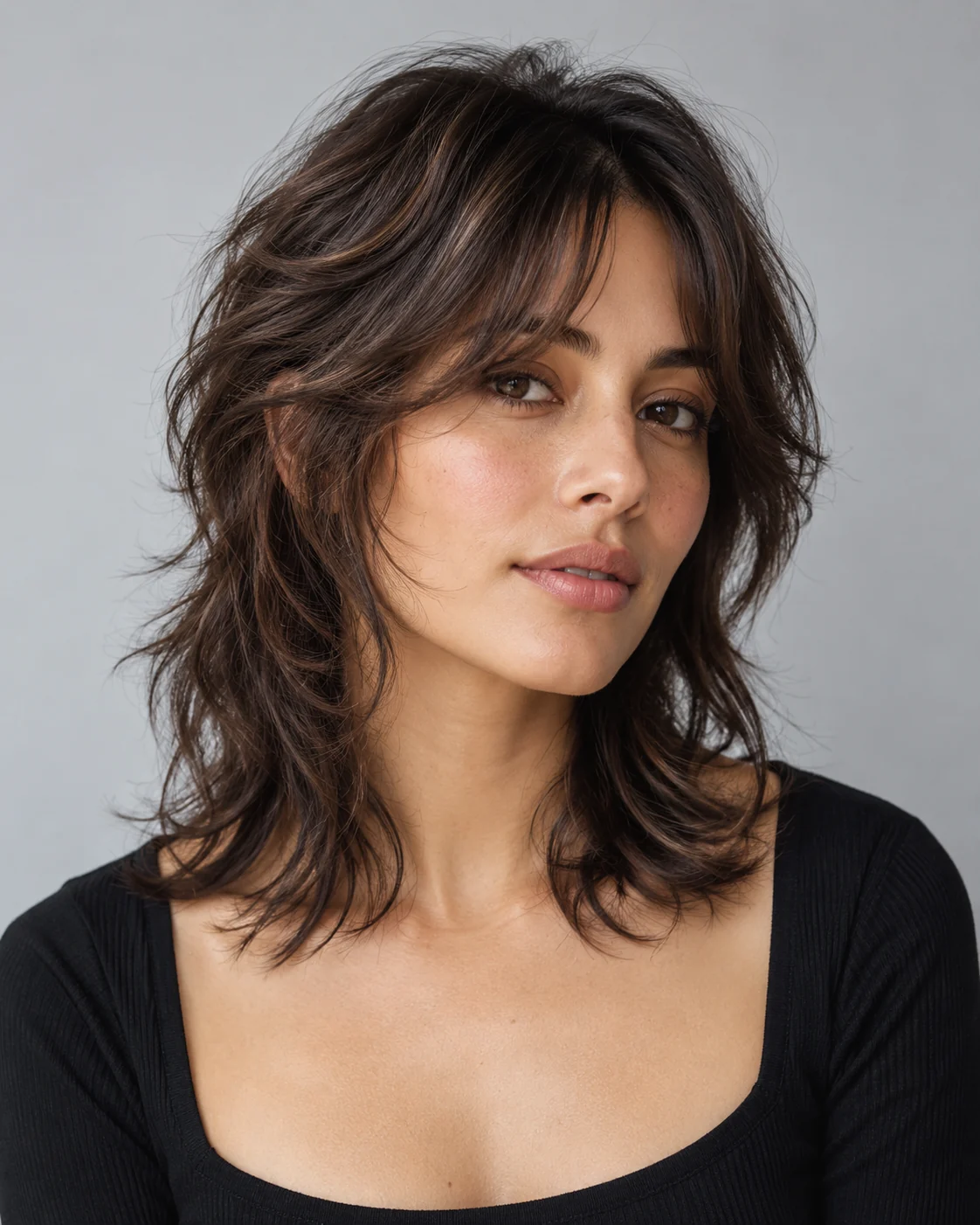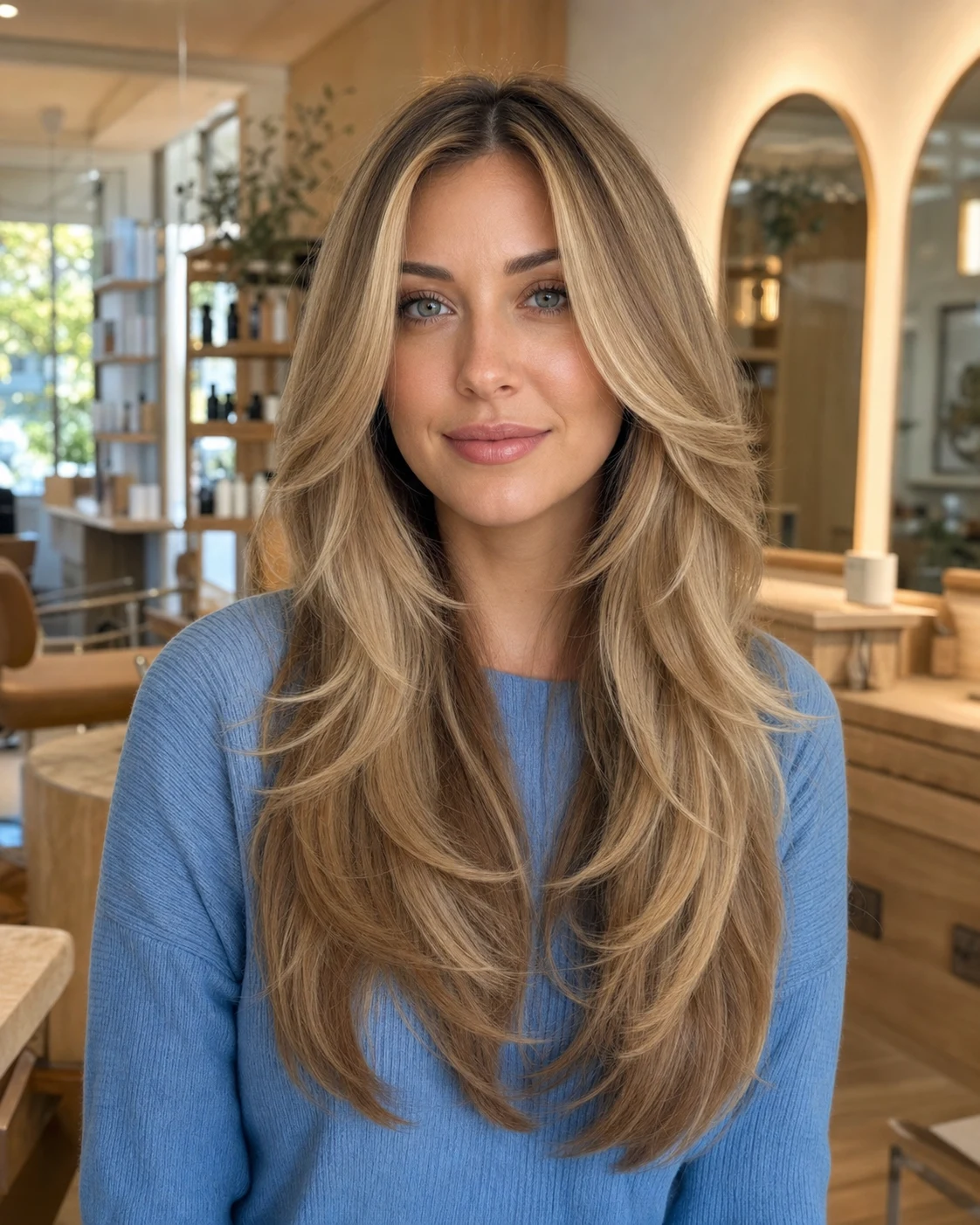
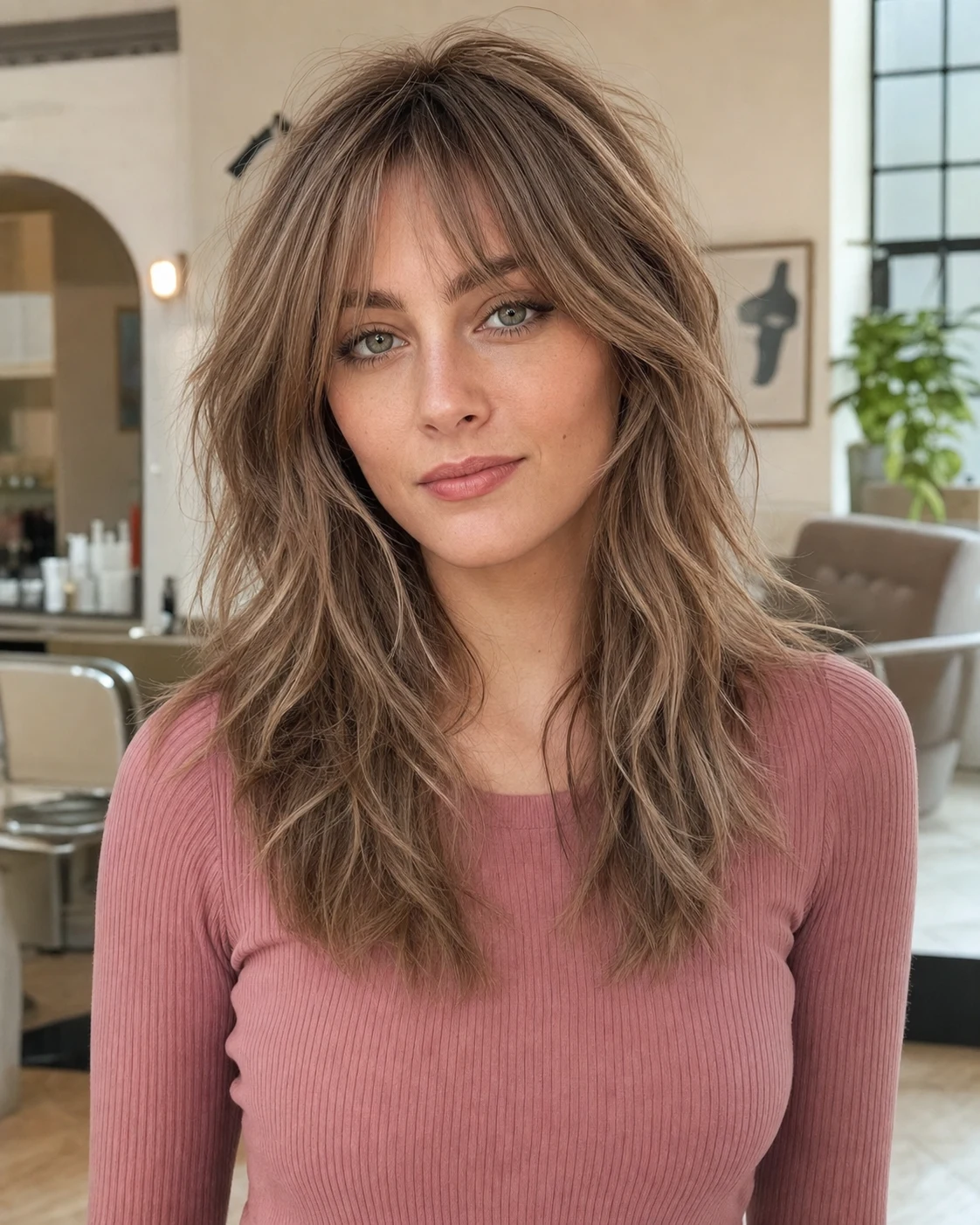
- Separate dense hair from coarse strands; both affect the plan differently.
- Ask where weight should stay as clearly as where it should leave.
- Compare a dry, natural-texture outline with a polished salon reference.
Define what makes your current hair difficult
Thick waves can feel difficult for several unrelated reasons. Drying may take longer than you want; the lower edge may spread outward; the crown may sit flat above a wide bottom; or a dense front may feel heavy across your face. Name the actual problem. A cut designed to solve one issue can make another more noticeable. Removing length may speed up handling while increasing width, for example.
Look at your hair on a normal wash day and on the day before you usually wash again. If the first day has a broad outline but the next day settles comfortably, explain that change to the stylist. Your preferred result might be a softer first-day shape, rather than a dramatically smaller head of hair. The way the style evolves matters as much as its freshly finished appearance.
Keep density, strand size and wave pattern separate
Thick can mean many fine strands, relatively substantial individual strands, or both. Density affects how much hair is available to support an outline. Strand size affects feel and flexibility. Wave pattern affects how that length folds when dry. A photograph marked thick hair does not tell you which combination it shows, so use it for the silhouette rather than as a prediction.
Show the stylist where your waves are strongest and where they remain straighter. A comparatively straight surface over a wavier underlayer may produce a different shape when the shorter pieces are exposed. If the nape shrinks more than the front, a visually level wet cut can dry into a different outline. Ask the stylist how they will account for those differences without assuming every section behaves the same way.
Compare length before comparing haircut names
Longer waves can retain a downward movement that you enjoy. Removing some length may make the shape feel livelier, yet the extra movement can also mean more width. A collarbone cut sits between those options, but shoulder contact is a variable of its own. A bob exposes more of the individual wave turns and needs a clear conversation about how broad or rounded the outline should be.
Try holding the lower lengths underneath to approximate different positions in a mirror. This is only a rough visual exercise because folding hair does not change its weight like cutting does. Use it to learn whether you prefer an open neck, visible shoulder space or a longer vertical line. Then ask the stylist which version could work with your real wave pattern.
| Starting point | Potential advantage | Main decision |
|---|---|---|
| Long layers | Movement while retaining familiar gathering length | How much fullness to keep at the lower edge |
| Collarbone shape | Less length with a useful tie-back option | Whether waves clear or meet the shoulders |
| Wavy bob | A clearer shape around the head and neck | How much dry width and shrinkage you enjoy |
Ask for a map of weight, not an instruction to thin everything
Internal shaping can create space within a dense haircut while leaving the outside outline relatively intact. Visible layers alter the silhouette more obviously. Neither description tells you the exact result on its own. Ask the stylist to point out the areas they want to make lighter, the areas that need support and what you should expect to see when the hair is naturally dry.
If you have had a cut that felt fuzzy or insubstantial after heavy texturizing, describe it without prescribing a technical solution. Explain where the short pieces appeared and what bothered you about the grow-out. The useful goal is not a particular tool. It is a balanced distribution of length that works with your waves and does not leave the surface feeling disconnected from the underneath.
Choose the amount of visible layering you actually like
A shag or soft wolf shape makes shorter sections part of the design. That can be appealing if you enjoy movement around the crown and a more open lower outline. It may be less convenient if you want every piece to reach a bun, or if your surface waves form loose bends that need encouragement to look like the reference. A quieter layered shape may offer enough change without that extra front section.
Check the shortest layer from the side. Front-facing photos can hide how high it starts or how much separation exists between the crown and the ends. Ask whether it will still look intentional when you wear your natural part, when the waves relax and when the hair is pulled back. If you alternate between natural waves and straightened hair, make that part of the consultation rather than an afterthought.
Give the front its own plan
The front of a thick, wavy haircut is often where daily maintenance becomes concentrated. A short fringe may need a separate reset even if the rest air-dries well. Longer face framing can be easier to clip or tuck, but it may spring shorter than expected when a wave folds near the cheek. Show your glasses, usual part and preferred way of keeping hair off your face.
You can choose a haircut with movement while leaving the front comparatively long. That is useful when your priority is gathering hair for exercise or work. Ask for the shortest dry point to be demonstrated before cutting. A photograph of a long curtain fringe with a blown-out curve should not be interpreted as a guarantee that your natural waves will sit in the same direction.
Make the drying method part of the design
A haircut that relies on a smooth blowout may still be beautiful, but it is a different commitment from a shape that works with air-dried waves. Tell the stylist how you arrange your hair while it dries, whether you usually diffuse and how much time you can tolerate before leaving the house. Ask which finishing steps are essential and which create only the particular salon photograph.
For a useful first home check, use a familiar routine instead of adding several new products. Note where the outline forms naturally and which areas need repeated handling. If you are changing the routine as well as the cut, make one adjustment at a time. That helps distinguish an unsuitable landing point from a drying habit that is temporarily changing how the waves settle.
Plan the less photogenic situations
Try the new shape with a coat collar, a hood, a work headset and your everyday bag strap. Thick waves can be easy when left alone yet awkward when compressed under something for an hour. A low ponytail, loose clip or half-up option may matter more to your real routine than the ideal loose-hair picture. Tell the stylist if you need these options without many escaping pieces.
Discuss growth in terms of the areas you notice. A shorter crown may become less pronounced as it grows; a bob can gradually reach a shoulder position that changes its movement. You can choose to preserve a defined shape or let it soften. A practical haircut plan includes that choice, so you are not surprised when the outline changes even though the cut is still healthy-looking and wearable.
Preview the outline, then verify the behavior in person
Hair Muse AI can help you compare a longer layered outline, a collarbone cut and a wavy bob on a photo using an iPhone or iPad. Keep the imagined texture similar when comparing length so you can identify what you actually prefer. Save a small number of references and mark the elements you like, such as a more open neck or less width below the cheeks.
A generated reference cannot measure your density, map every wave or show your real drying time. Bring it as a conversation starter alongside pictures of your own hair. Ask the stylist what can be adapted, what would require styling and what should remain longer for your comfort. The goal is a repeatable version of the idea rather than an exact copy of a constructed image.
A starting brief.
My priority is a manageable dry silhouette in my natural waves. Please assess where the density needs support and where internal space would help. I want to keep practical gathering options and avoid a front section that needs a separate blowout. Show me the shortest dry layer and the expected width before we agree on the final length.Make it your own
Questions, answered.
01Will thinning my hair automatically make it easier?
No. Removing weight changes how sections move, and more movement is not always the result you want. Ask where your haircut needs space and where it needs support. A targeted internal adjustment and a visibly layered cut solve different problems.
02Is a short cut less work on thick waves?
It can reduce the amount of length you handle, but it may increase visible width or remove your easiest tie-back option. Compare both drying work and daily containment. A slightly longer cut can be easier if a secure ponytail is central to your routine.
03Do I need bangs with a shag?
No. You can discuss crown and length movement while keeping the front longer. The stylist may adapt the overall shape so it remains connected without a short fringe. Be explicit that keeping the front tuckable is part of the haircut, not a detail to decide afterward.
04What reference photographs are most useful?
Choose pictures with a similar natural wave direction and enough side or back detail to see the outline. Include one image of your own air-dried hair. Mark the features you want rather than asking the stylist to reproduce every detail of another person’s texture.
A note on this guide
Written for haircut and color planning by CutChapter editorial, from the publisher of Hair Muse. Suggestions are context-dependent editorial guidance, not an in-person assessment. Color changes need a professional feasibility and safety discussion. Read our editorial policy.