
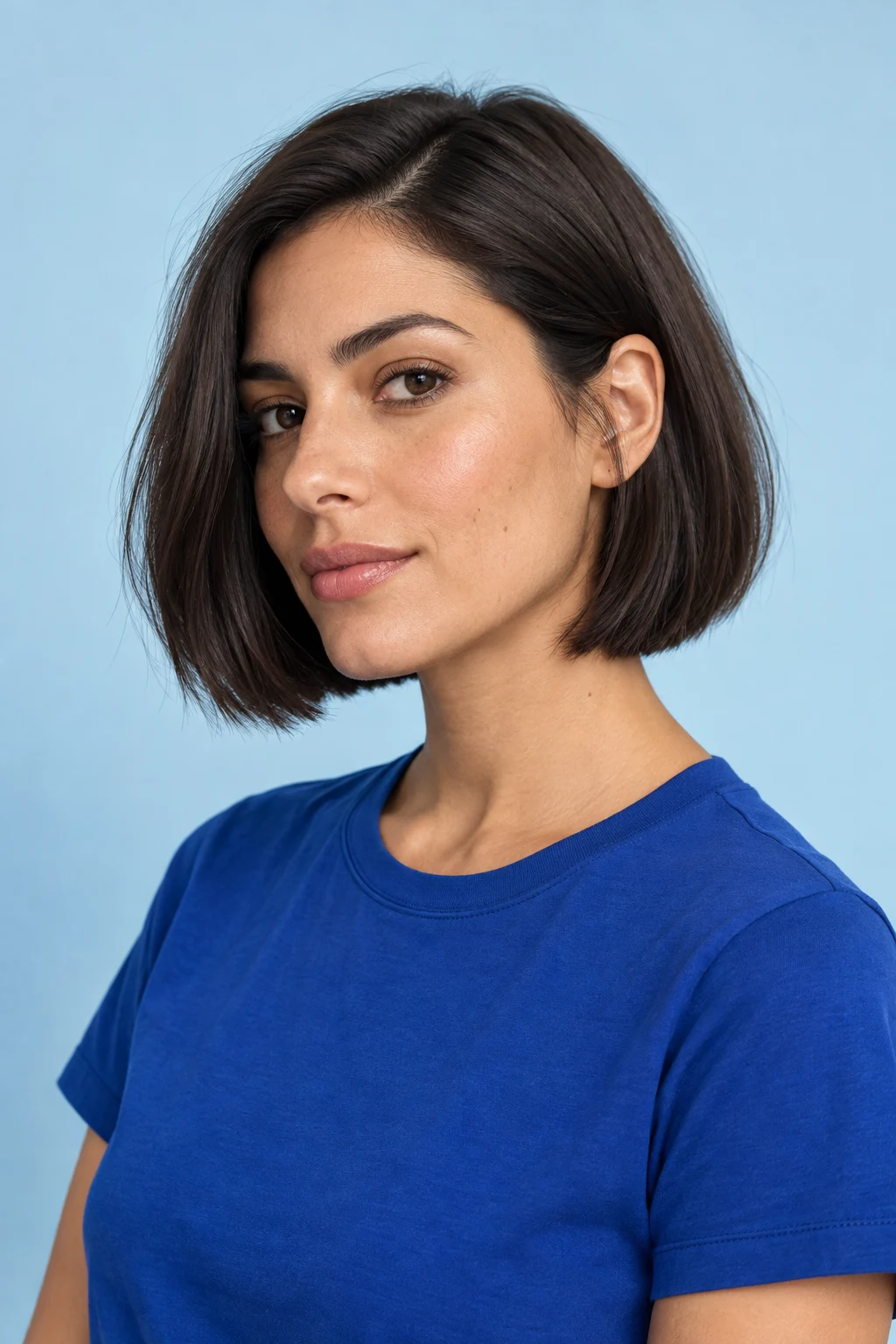
- Keep strand thickness separate from density: fine hair can still be plentiful.
- Choose a finished outline you like when your hair lies naturally flat.
- Protect tie-back length and ear tucks before adding shorter face framing.
First, define the work you want to remove
Low maintenance can mean a quick wash day, fewer appointments, less heat styling or simply fewer pieces falling across your eyes. These are different goals. A short, precise bob may dry quickly yet need reshaping sooner than a collarbone cut. Longer hair may take more drying time but offer a reliable ponytail on the mornings when you have no interest in styling. Write down the job you want your haircut to do before looking at names.
Use your current routine as the baseline. Note whether you usually brush and leave, blow-dry the front, tuck one side, or tie everything back. Then identify the single step you would most like to lose. If that step is straightening an already straight lower edge, a different landing point may help. If it is creating root height that immediately disappears, the answer may be a shape that looks intentional without that height, rather than more dramatic layers.
Fine strands and low density need different conversations
Fine describes the width of individual strands; density describes how much hair grows across an area. A person can have fine strands and a dense ponytail, or fine strands with a lighter overall outline. A reference photograph does not reliably reveal either. Bring a picture of your own hair clean, dry and minimally styled so the stylist can assess what remains at the perimeter when different sections are moved.
If the ends are already transparent, taking many sections shorter can make the lower edge look lighter still. That does not make every layer unsuitable. It makes placement more important than the promise of volume. A small amount of movement near the face may change the shape enough without layering the entire head. Ask where a proposed layer will end, what it removes from the outline, and how it will sit without a round brush.
Three starting shapes worth comparing
A blunt bob gives the lower edge a clear role. It can work well if your hair naturally hangs near the jaw or neck in a line you enjoy. The compromise is less room to gather hair, and a greater chance that a sleep crease or one outward flick will become the main feature. Look at the back as well as the flattering front angle.
A collarbone cut preserves more options for tying back and can feel less exacting as it grows. Its particular challenge is shoulder contact: ends may turn outward where they meet clothing or bone. A longer, mostly one-length cut keeps the familiar ponytail and may need less day-to-day intervention, provided you are comfortable with the roots lying close to the head. None of these shapes needs to imitate a blown-out reference to be successful.
| Shape | What it simplifies | What to check before cutting |
|---|---|---|
| Blunt bob | A clear outline and fewer long lengths to handle | Nape growth, sleep marks and whether both sides tuck |
| Collarbone cut | A middle ground between loose hair and tie-back options | Where dry ends hit the shoulders |
| Longer one-length shape | Familiar gathering and a predictable perimeter | Whether you like a flatter crown and longer drying time |
Choose the dry landing point
An instruction such as shoulder length sounds precise but can mean several different things once your shoulders, posture and natural part are involved. Show the intended dry position with your hand while sitting upright. If one side of your hair naturally turns out at the shoulder, discuss whether to sit clearly above that point or keep enough length to move past it. A halfway position can become an everyday styling project.
Do the same check for the front. The longest back section can reach a ponytail while shorter front pieces repeatedly escape. Before cutting face framing, gather your hair at the height you actually use. Show the shortest piece that must reach the tie. If you need a secure low ponytail for work, say that directly rather than assuming it follows from the overall length.
Be cautious about layers sold only as volume
Layers alter the distribution of length; they do not add hair. On fine, straight hair, a shorter section may move more easily, but it may also lie flat in a different place. A photograph with lifted roots, rounded ends and a light behind the hair can make a heavily styled result look like the haircut alone. Ask to see how the proposed shape could be worn without that finish.
You do not need a ban on every texturizing technique. You do need agreement about the visual result. Explain whether your priority is a full-looking bottom edge, softer corners, a lighter front or movement when you turn your head. These are useful instructions. Asking for lots of texture because your hair feels flat gives the stylist less information about what you want to preserve.
Test a low-effort finish at the appointment
Ask for at least part of the drying process to resemble your real routine. If you usually let the lengths dry naturally, a complete salon blowout cannot tell you whether the ends will lie where you expect. The stylist may need to dry and refine the shape, but you can still ask to see the resting position before it is polished into a different one.
Watch what happens when you put on your glasses, tuck one side and move your head. A bob that looks balanced only while you sit motionless may need a small adjustment. This is also the moment to ask for a simple reset demonstration: what to do with one bent front piece or a flattened crown. Choose a method you can repeat with the tools and time you already have.
Use your first week as a shape check
After the appointment, avoid judging the cut only by the first salon-finished evening. Notice it after your own wash, after sleeping and after a normal day outside. Take front and side photos in the same light. Look for a repeated issue rather than a single difficult day: one side always catches the collar, a front piece never stays tucked, or the perimeter becomes too narrow when you wear your usual part.
When requesting an adjustment, describe the behavior and bring those pictures. Saying that the left corner flips into your glasses is more actionable than saying the haircut feels wrong. Avoid immediately changing products, parting and drying method together. Keeping most variables familiar makes it easier to tell whether the cut itself needs attention.
Decide how much precision you want to maintain
A clear edge gradually softens as hair grows. You may like that change, or you may prefer the freshly defined line. Discuss your tolerance rather than accepting a universal trim calendar. Ask the stylist what part is likely to change first on your hair: the nape, the front corners, the shoulder contact, or the weight near the jaw. Book around the shape you wish to retain and your own budget.
For a lower-commitment first cut, keep the perimeter slightly longer and the front less disconnected. You can shorten it later once you know how it behaves. If you want to compare the visual difference before committing, use Hair Muse AI on an iPhone or iPad to explore a short bob beside a longer outline. Treat the images as planning references; they cannot tell you how your own strands will settle after washing.
A starting brief.
I want a shape that looks finished when my fine, straight hair lies naturally. Please assess my density before adding layers, keep the lower edge visibly full, and show me the dry landing point. My priorities are ear tucking, my usual part and a routine without a daily blowout. Let us check the ponytail before shortening the front.Make it your own
Questions, answered.
01Is a bob always easier than long fine hair?
No. A bob may reduce drying and detangling work but remove your easiest fallback, the ponytail. It can also make sleep bends more visible. Compare the complete routine, including how you recover from an awkward morning, instead of comparing hair length alone.
02Should fine straight hair never have layers?
There is no universal rule. Consider density, the fullness you want at the ends and the amount of styling you enjoy. Limited face framing or subtle shaping may be enough. Ask the stylist to show where shorter pieces would fall before agreeing to an extensively layered shape.
03Can I get volume without daily heat?
A haircut can change how weight and movement appear, but it cannot promise lasting root lift. Choose an outline that you like when your roots sit naturally. If you prefer more lift for special occasions, treat that as an optional finish rather than a requirement for the cut to look complete.
04What should I bring to the consultation?
Bring an unstyled picture of your own hair, two references showing the outline you like, and a note about your non-negotiables. Include whether both sides must tuck, the height of your normal ponytail, your usual part and the maximum time you want to spend resetting the front.
A note on this guide
Written for haircut and color planning by CutChapter editorial, from the publisher of Hair Muse. Suggestions are context-dependent editorial guidance, not an in-person assessment. Color changes need a professional feasibility and safety discussion. Read our editorial policy.