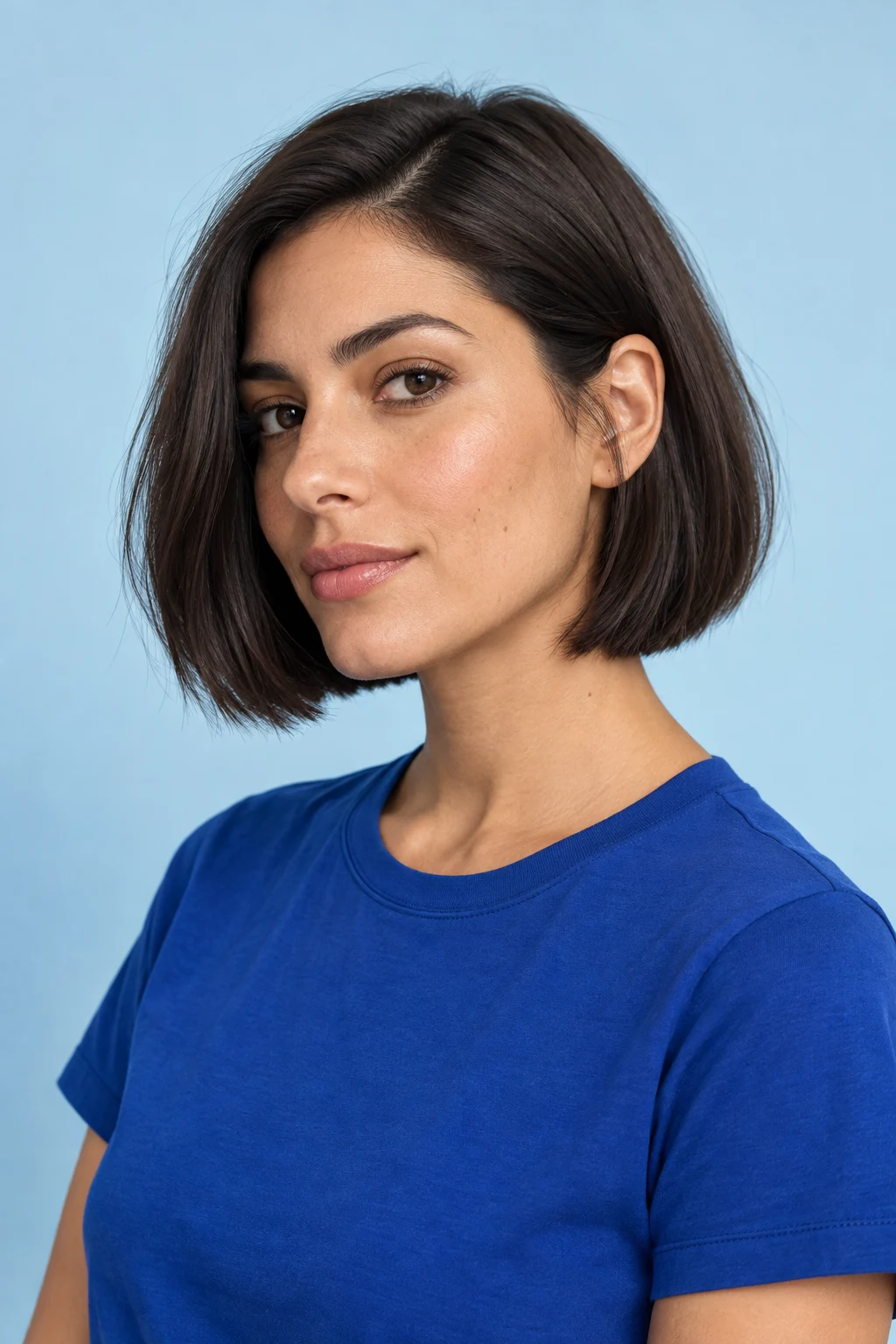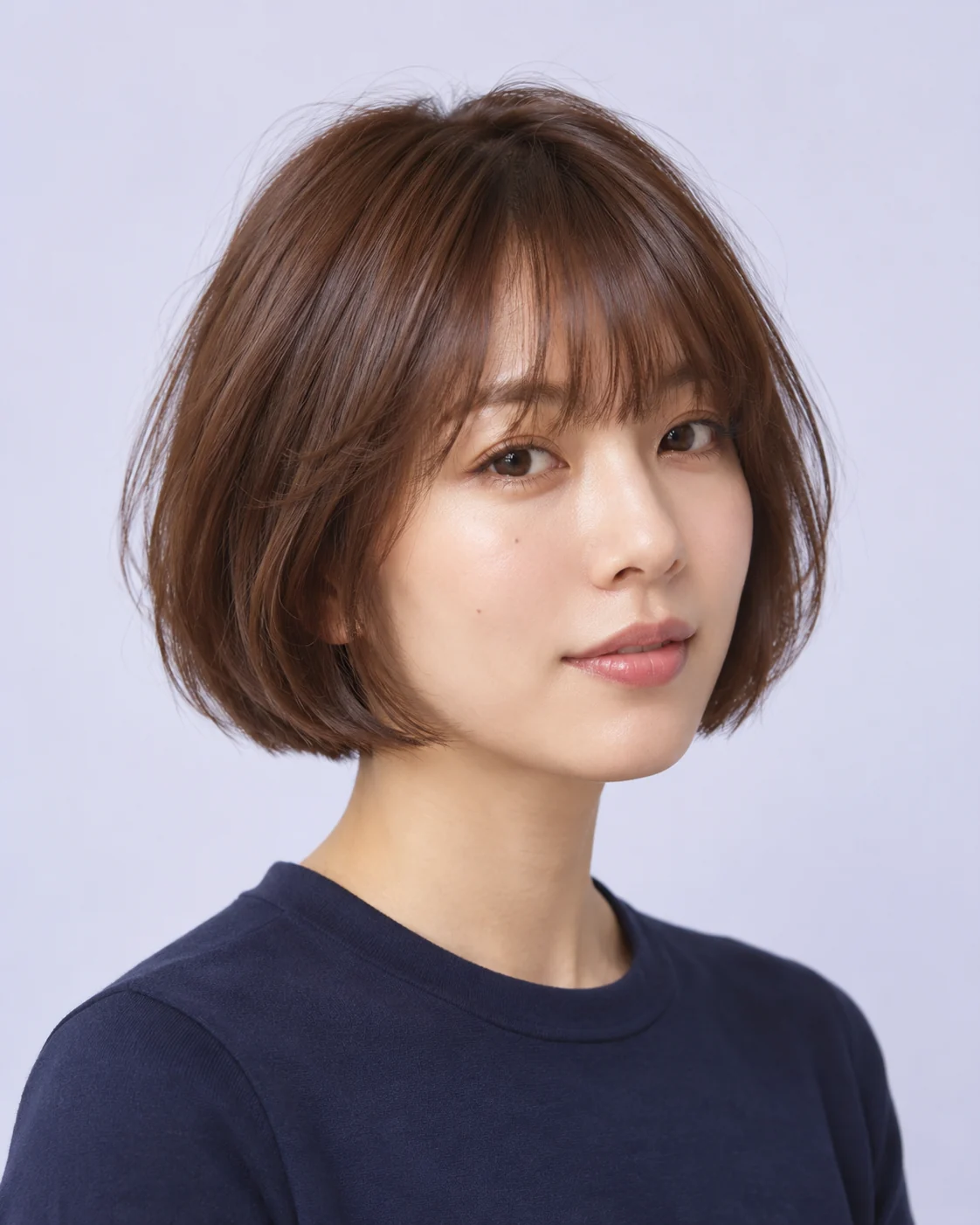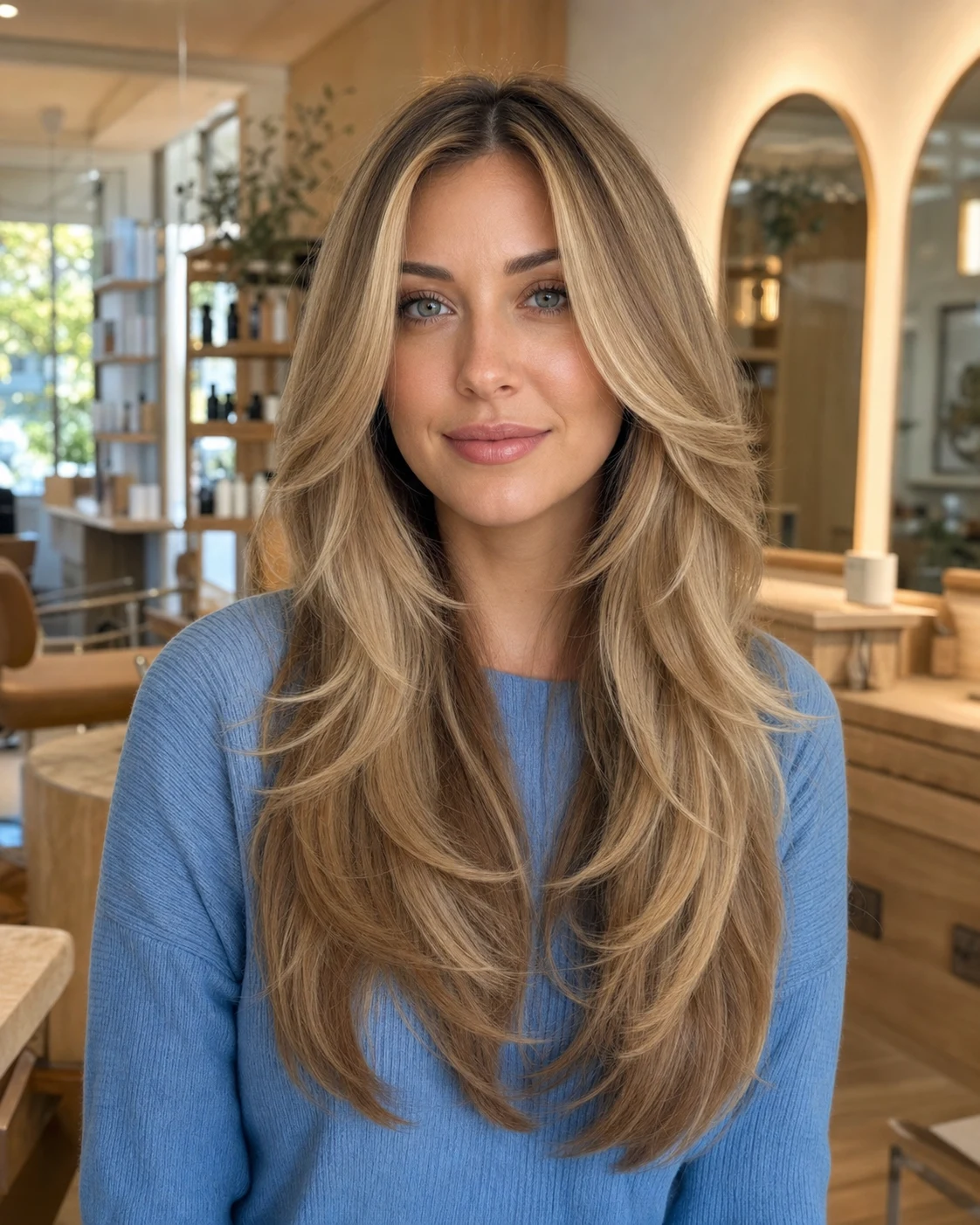
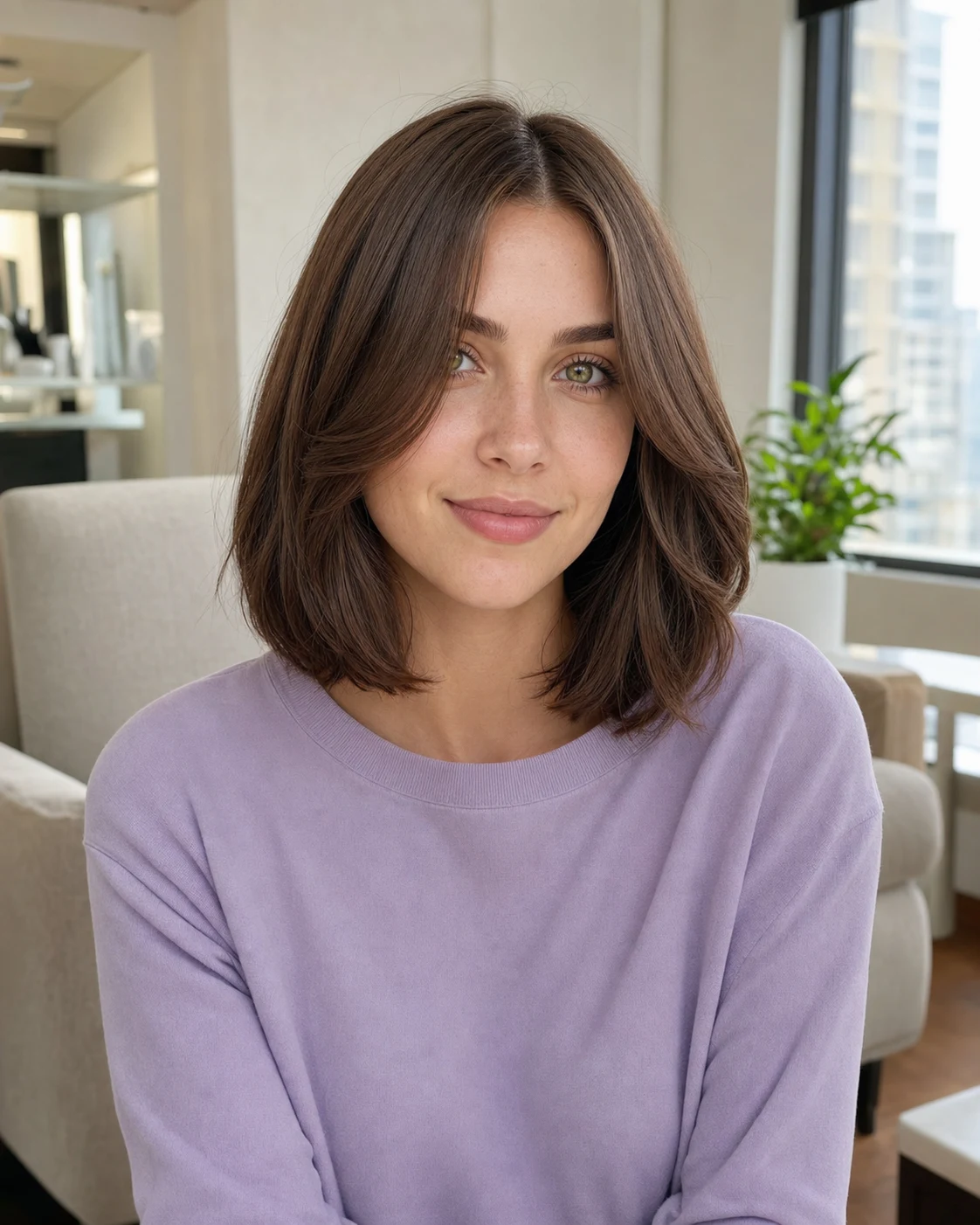
- Curtain bangs usually include shorter front sections that part or sweep apart.
- Longer face framing can keep the forehead open and preserve more tucking options.
- Decide where the shortest piece should land when fully dry.
These are related shapes with different starting points
Curtain bangs usually begin with shorter front pieces that open around a part and blend outward. Face-framing layers can start much lower, following the cheek, jaw or neck without creating a forehead fringe. The boundary is flexible: very long curtain bangs can resemble short face framing. Rather than arguing about the label, agree on the dry landing point of the shortest piece.
Hold the reference beside your normal hair and ask what would actually change. If the only appealing feature is a little movement beside the jaw, you may not need a fringe. If you want visible framing across part of the forehead, longer layers alone may not deliver it. The first choice is the amount of front coverage, followed by how that coverage should move.
The practical comparison
| Detail | First direction | Second direction |
|---|---|---|
| Shortest section | Curtain bangs: usually higher near the face | Face framing: can begin at cheek, jaw or lower |
| Forehead effect | Some fringe coverage even with an opening | Often a more open forehead |
| Fallback styling | May need directing or clips | May preserve tucking and gathering if long enough |
| Main consultation limit | How short will it appear when dry? | Where should the framing begin? |
Forehead coverage changes the daily experience
Curtain bangs can leave the middle of the forehead open while still placing short hair near the brows or temples. Those pieces may respond differently to sleep, moisture and your hairline than the longer lengths do. Face-framing layers that start lower usually have more room to move without crossing the forehead.
Think about whether you enjoy hair close to your face. If you often push the front away, explain why: comfort, clear vision, skin-care habits or simple preference. A fringe that looks open in a photograph may still need daily placement to stay that way. Longer framing can be a useful alternative when you like a softened outline but dislike the physical sensation of short front pieces.
Tucking is a length requirement, not a styling promise
A piece that reaches your cheek may look long but still fail to tuck securely behind the ear. Even a piece that reaches can spring out because of its growth direction or texture. If a reliable tuck is essential, show your stylist how you wear it and ask which dry length preserves that habit.
Curtain bangs may be intended to sit forward and separate, so the ability to tuck them can conflict with the shortness that defines the reference. Longer face framing offers more possible flexibility, but it must still be planned. You can choose an in-between length deliberately, accepting a gentler visual effect in exchange for a practical fallback. Make that tradeoff explicit before cutting.
Your natural part affects the result
Curtain-bang references often assume a central or near-central opening. A strong side part or hairline cowlick may create a different split. That does not automatically rule out the look, but it may require a modified front or more daily directing than the image suggests. Longer face framing can often follow an existing part with fewer changes to the hairline area.
Let the stylist see the front without forcing it into a new part first. Explain where it naturally separates and what happens after you sleep. If you are willing to train or style a different part, say so; if you are not, ask for a version that respects the existing direction. The aim is to choose knowingly rather than discovering the required routine afterward.
Glasses add another landing point
Frames create a physical edge that shorter front pieces may catch on, flip around or sit inside. Curtain bangs can work with glasses, but the relationship between the shortest section and the upper frame deserves attention. Longer framing may sit outside the frames more easily, depending on its length and direction.
Wear your everyday glasses during the consultation and try your sunglasses too if they are a regular part of your day. Ask to check the front both with and without them. A fringe that looks perfect when frames are absent may need a different length if the temples push it forward. The glasses are part of the haircut environment, not an accessory to consider only after the cut is finished.
Texture changes where the shortest piece appears
Waves and curls can make a freshly cut front settle higher or in a different direction once dry. A curtain fringe shown with a smooth curve may need styling to reproduce that finish on textured hair. Longer face framing may allow more of your natural pattern to remain intact, though it still needs thoughtful placement.
Ask for a dry-length conversation, particularly if your front behaves differently from the rest of your hair. Show the shortest appearance you are comfortable with rather than only the stretched length. You can request a longer initial version and reassess after seeing it in your usual routine. That approach is useful when the uncertainty is about shrinkage or direction, not a substitute for discussing the desired final shape.
Choose the amount of attention you want to give the front
A curtain fringe may be the only area that needs a reset on an otherwise good hair day. Some people enjoy that small task because the change near the face feels worthwhile. Others prefer a haircut whose front behaves like the rest of the lengths. Longer face framing can be a better fit for that preference, especially when the pieces still gather easily.
Describe a typical rushed morning to the stylist. Do you have time to wet and redirect the front? Are you comfortable using a brush near the face? Would you rather clip it away? The relevant maintenance measure is the number of tasks you accept, not a universal claim that curtain bangs are easy or difficult. Your own tolerance should shape the recommendation.
Try the front as the only variable
In Hair Muse AI for iPhone or iPad, compare curtain-bang inspiration with longer, lower face framing on the same photo. Keep the rest of the haircut and color as close as possible. Look at the forehead opening, the amount of cheek coverage and the relationship to any glasses in the image. If the app changes several details at once, note which feature you actually want to discuss.
A preview cannot test a cowlick, prove that pieces will tuck or predict the way frames push the hair. Save it as a visual preference and add a practical note. For example, you might like the cheek-level softness but require the shortest pieces to stay outside your glasses. That combination helps a stylist translate the image into a realistic front.
Compare the grow-out paths
Curtain bangs usually create a shorter starting section than longer face framing, so there is more distance to cover before the front rejoins longer hair. During that transition, the pieces may pass through brow, cheek and jaw positions that behave differently. Face framing can begin closer to a length you already know how to tuck or gather.
If you are nervous about grow-out, ask which intermediate length would let you test the idea while preserving a workable fallback. Also discuss what a later trim would maintain. Recutting the shortest curtain pieces keeps the fringe look; allowing them to lengthen gradually changes it into a more general face frame. Neither approach needs to be a surprise.
A forehead-comfort check
Imagine that you like the softness of curtain-bang references but push your current front away whenever it touches your forehead. The visual preference and the comfort habit may conflict. Before cutting, ask to compare the reference with lower framing that starts near the cheek or jaw. The longer version may provide the softness you want without introducing a short fringe sensation you already know you dislike.
If you still prefer the curtain shape, agree on the shortest dry length and the amount of forehead coverage you are willing to manage. Do not rely on a perfectly open photograph to mean the pieces will never move forward. Consider a normal commute, looking down at a desk and wearing glasses. The useful test is whether the front remains acceptable when it is not carefully arranged. You may discover that you want bangs after all, but the choice will be grounded in both appearance and comfort. Longer framing is also a complete design option, not merely a timid version of a fringe.
A useful decision rule
Start with curtain bangs if you specifically want shorter front coverage and are comfortable making the fringe a separate styling area. Start with longer face framing if you want movement around the face while keeping an open forehead and more familiar tucking or gathering options. If both appeal, agree on a demonstrated shortest dry length and build the shape from there.
Avoid asking for curtain bangs that never behave like bangs. That phrase hides incompatible expectations. Instead, name the desired benefit and the practical limit: softness near the cheeks, no pieces across the brows, or a reliable ear tuck. The stylist can then recommend whether your goal is best served by a long curtain shape, face framing or a different front entirely.
A starting brief.
I want softer framing near my cheeks, but I need to compare curtain bangs with longer layers that still tuck. Please assess my natural part and show me the shortest dry length before we decide.Make it your own
Questions, answered.
01Can long curtain bangs become face-framing layers?
Yes. The terminology overlaps as the shortest section gets longer. Ask for a demonstrated dry landing point and the amount of forehead coverage you want.
02Which is easier with a cowlick?
Longer framing may avoid cutting directly into the strongest hairline movement, but individual growth patterns vary. Let a stylist assess your natural part and discuss the routine each option would require.
03Can I keep all my hair in a ponytail?
Possibly with longer framing, but the shortest front pieces must reach your actual fastening point. Demonstrate your ponytail before the cut rather than relying on the overall length.
A note on this guide
Written for haircut and color planning by CutChapter editorial, from the publisher of Hair Muse. Suggestions are context-dependent editorial guidance, not an in-person assessment. Color changes need a professional feasibility and safety discussion. Read our editorial policy.