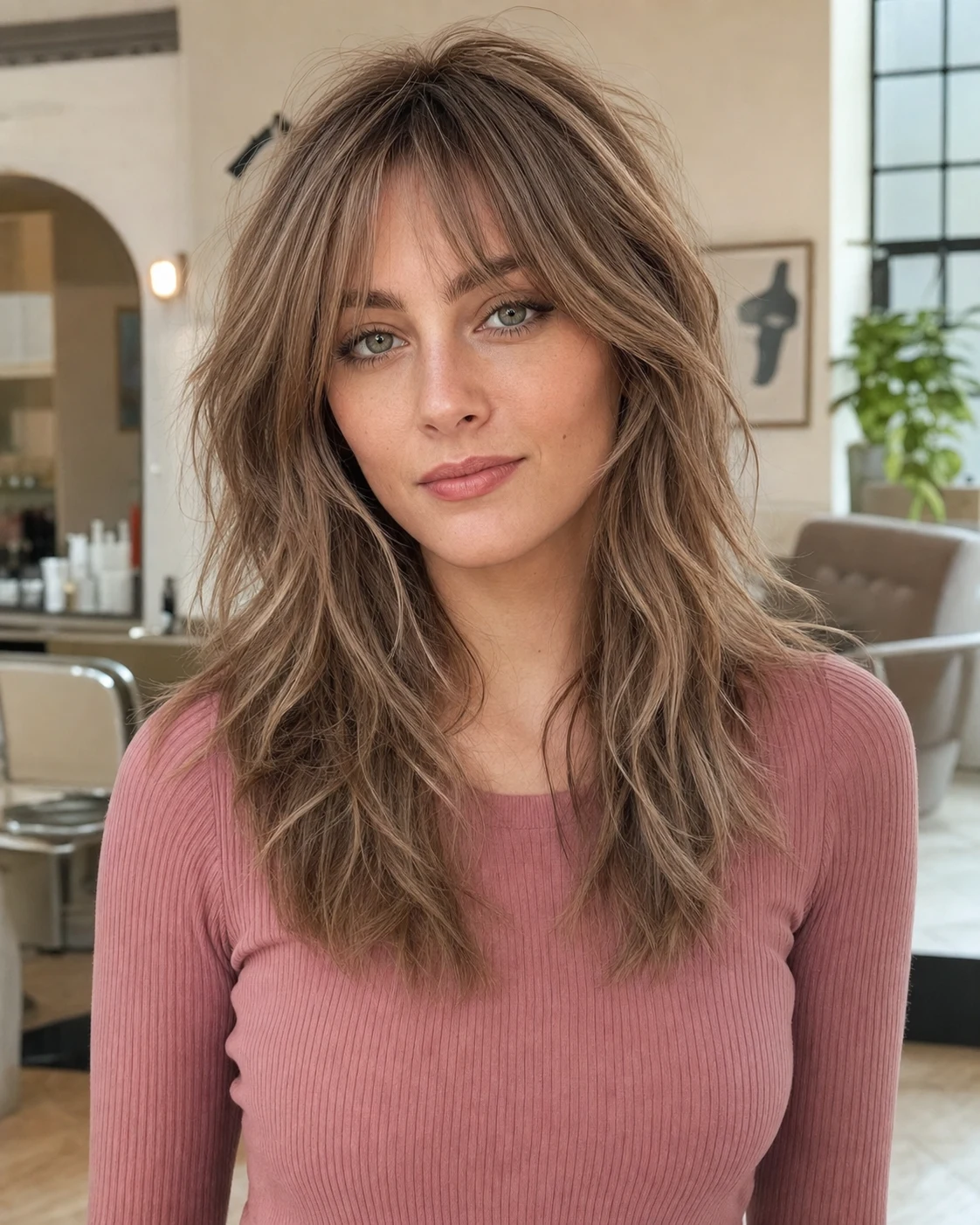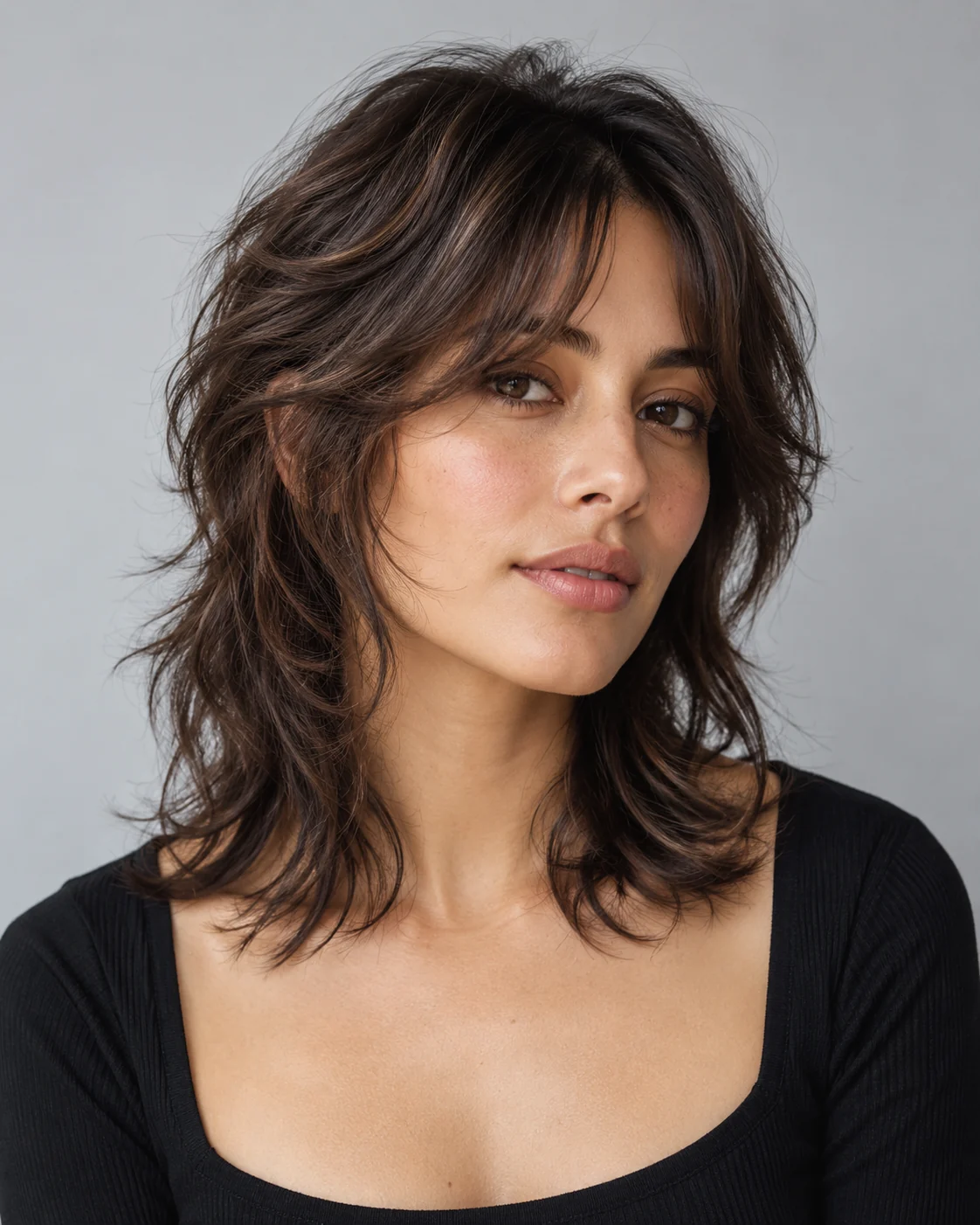
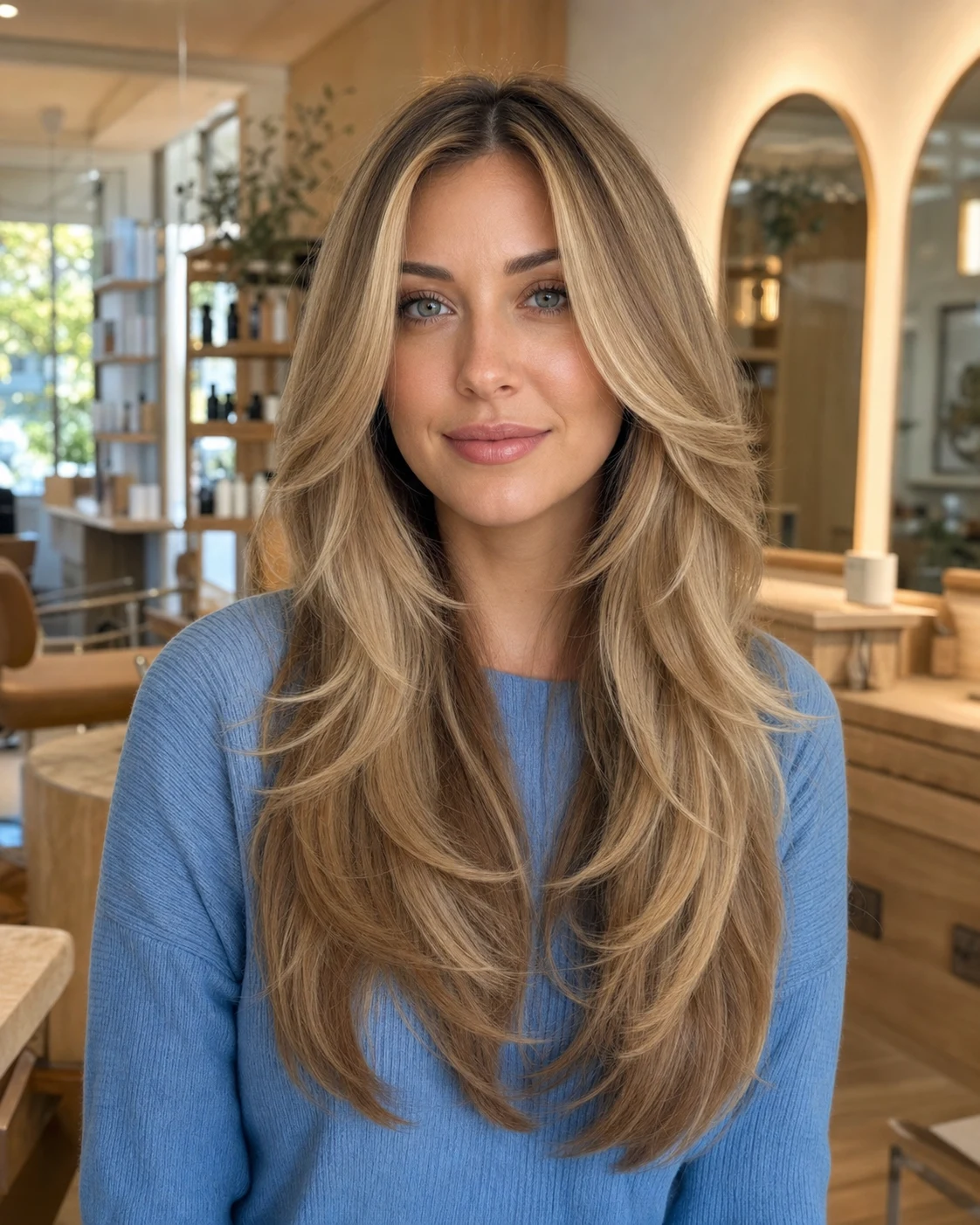
- A butterfly reference often has a stronger split between shorter framing and long lengths.
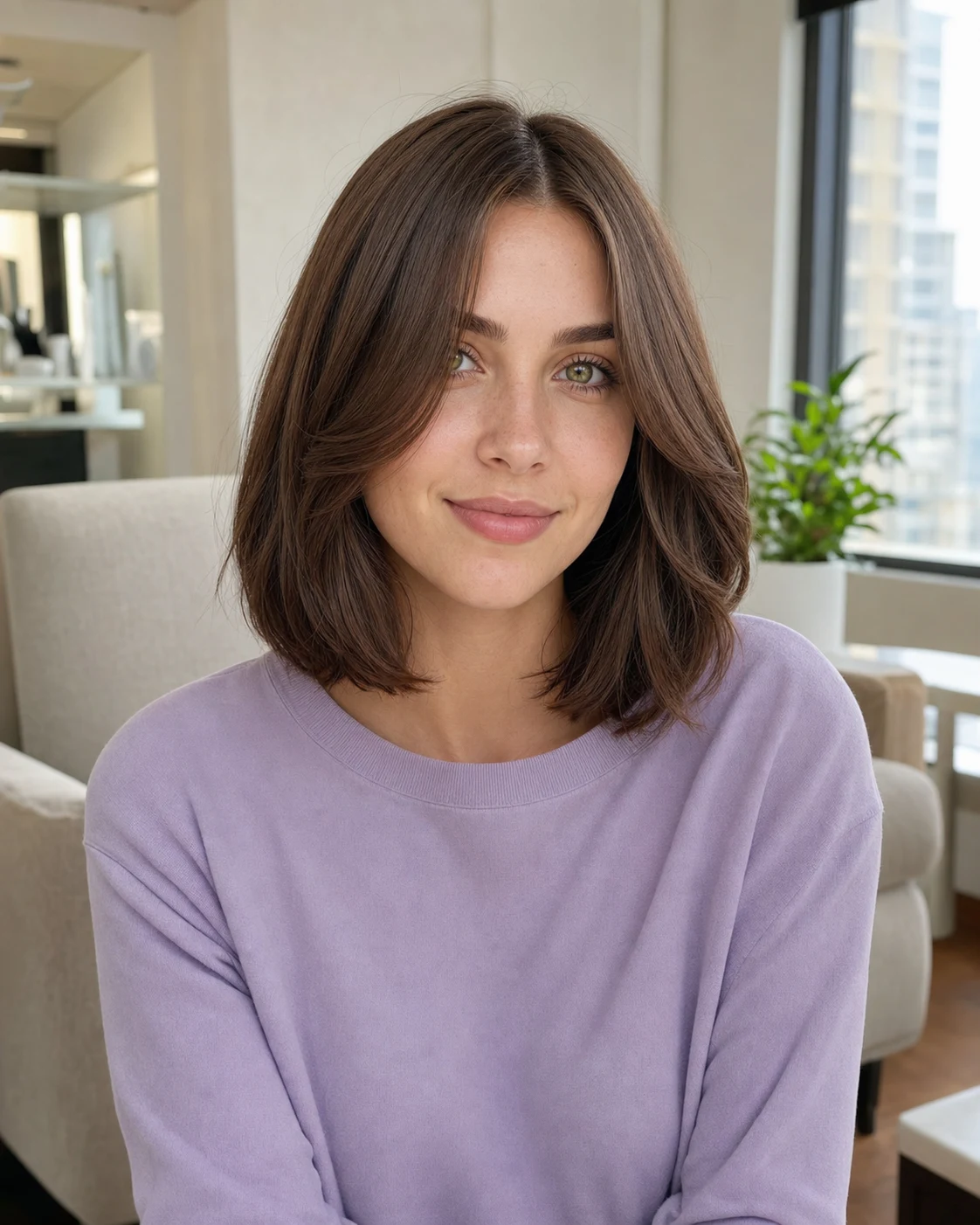
- Long layers can be subtle or dramatic, so specify the shortest section.
- A blowout can make the distinction look larger than the cut alone would.
Keeping length can still mean a large change
A butterfly haircut is commonly associated with shorter, sweeping upper and face-framing layers that sit over retained long lengths. Long layers can create movement while keeping the difference between sections less pronounced. These descriptions overlap, and trend names vary. The key distinction is how much shorter the top and front become compared with your longest ends.
If you are attached to your length, look beyond the back measurement. You may keep every inch of the longest central section while losing substantial coverage at the sides. Ask the stylist to show the shortest face-framing piece, the shortest upper layer and the portion that remains at the perimeter. Those three points explain the commitment more clearly than a promise to keep it long.
The practical comparison
| Detail | First direction | Second direction |
|---|---|---|
| Typical contrast | Butterfly references: shorter-looking upper frame | Long layers: can preserve a gentler transition |
| Front commitment | Often a prominent part of the haircut | Can be kept long and easy to gather |
| Perimeter question | How much density remains beneath the upper shape? | How continuous should the lower edge stay? |
| Routine question | Will you direct the shorter layers away from the face? | How much movement do you want without styling? |
What creates the butterfly effect?
The familiar butterfly silhouette often includes an open, swept-away front and visible movement in the upper lengths. In many reference photographs, a blowout or other directed styling helps create that effect. The cut supplies the lengths that can move; the finish determines how clearly they separate and sweep. A picture alone does not establish how it will look after your normal wash.
Identify whether you love the layering or the way the front is arranged. If you mostly want an airy sweep near the cheeks, a smaller face-framing change might answer the brief. If you want short-looking volume over long lower lengths, a stronger contrast may be necessary. Ask what happens to each version when you do not style the front away from your face.
Long layers are not automatically invisible
Long layers can still be obvious, especially if the difference between the shortest and longest lengths is substantial. They can also be restrained enough that the main impression remains long hair with a continuous edge. The phrase long layers is therefore incomplete without a discussion of where they begin and how much weight stays at the bottom.
Bring a reference that shows the hair from behind, or describe the back outline you want. A front-facing photograph may hide the amount of separation through the perimeter. If maintaining a full-looking lower edge matters, make it a first priority rather than an afterthought. The stylist can explain how much upper movement is possible while keeping the side and back density you value.
Consider fine strands and actual density
A dramatic layered reference can appear abundant because the person has high density, a styled finish or both. Fine strands do not rule out layers, but they make it especially important to ask what remains in the ends. If the front already seems light, shortening large sections there may create a different effect from the one you imagined.
Fine but plentiful hair may tolerate a different arrangement than fine, low-density hair. Avoid treating the word fine as the whole diagnosis of your haircut needs. Describe whether your complaint is flat roots, heavy mid-lengths, sparse ends or a lack of movement around the face. Each concern points to a different area of the cut and may not require a full butterfly shape.
Your wave pattern may change the outline
On naturally wavy hair, shorter layers can reveal bends that were less obvious under the weight of long lengths. They can also create pieces that fall in different directions. A butterfly reference with evenly brushed-out curves may not resemble the air-dried version of your wave pattern. That difference is not a failure, but it belongs in the consultation.
Ask to discuss both a textured finish and the styled finish you like. If you will usually air-dry, prioritize the former. If you enjoy a deliberate blowout on selected days, ask whether the same cut can feel coherent in both modes. Your goal might be a softer layer contrast that leaves the natural pattern connected while still allowing a more dramatic styled front.
Check the ponytail before agreeing to the front
Long hair does not guarantee that every new front layer reaches your usual fastening point. A butterfly-style face frame can leave pieces loose around the cheeks, while restrained long layers may preserve more gathering options. If you need complete clearance during work or exercise, demonstrate the ponytail or bun position you use.
There may be a workable compromise in the length of the shortest front section. The stylist can explain what that compromise changes visually. It is better to choose a slightly longer front deliberately than to discover afterward that your favorite practical hairstyle now requires clips. Loose framing can be lovely, but it should be a choice rather than a hidden cost of keeping long hair.
Count the routine in tasks, not minutes
Instead of asking whether the butterfly cut is high maintenance, ask what actions produce the reference: drying the roots, directing the front, shaping the upper layers or smoothing the ends. You may enjoy one of those tasks and dislike the others. Long layers may require less visible shaping in one version and a very similar routine in another.
Describe the tools you already own and use confidently. A haircut should not be sold as easy on the assumption that you will adopt a new technique every morning. Ask the stylist to demonstrate the minimum acceptable finish and the more polished version. You can then decide whether the extra visual effect is worth the extra task on the days you actually want it.
Compare the same person in two directions
In Hair Muse AI for iPhone and iPad, explore a butterfly-style layered look and a softer long-layered direction using the same clear photo. Keep color similar and focus on the amount of open space near the face, the height of the upper movement and the appearance of the longest ends. Save the direction you prefer and note which single feature makes it work for you.
The preview cannot establish how much real hair must be removed to produce that outline or how your layers will dry. Use it to sharpen your visual preference, then let the stylist assess feasibility. If the image shows much more density than you have, say that you like the proportion but want a realistic version that preserves your own perimeter.
How the choice affects growing out
Shorter face framing takes longer to rejoin the longest lengths than a more restrained front. If you might want one-length hair soon, discuss the starting point of each proposed layer and the likely sequence of shapes on the way back. You do not need a calendar prediction to understand which option creates a larger length gap.
At later appointments, distinguish keeping the butterfly silhouette from growing toward softer long layers. Refreshing the shortest sections repeatedly preserves the original contrast. Allowing them to lengthen can gradually reconnect the outline. Ask what can be trimmed without resetting the section you want to grow, especially if your ends need tidying while the front remains much shorter.
A ponytail-first version of the comparison
Suppose you want the swept front in a butterfly reference but need every piece secured in a high ponytail during work. The longest back length is not the conflict; the proposed short front is. Demonstrate the fastening and ask the stylist which minimum dry length preserves it. Then compare a longer face frame within that limit with the shorter reference.
You may decide that the gentler version provides enough movement and keeps the useful habit. Or you may prefer the stronger butterfly effect and accept using another practical solution. Either is a clearer decision than asking to keep all the length while silently including every short front piece in that promise. The same exercise can be repeated for a crown layer if it affects your preferred gather. Identify the shortest usable section, explain why it matters and let the stylist show what visual effect remains possible. This keeps the conversation focused on a real tradeoff instead of treating retained long ends as proof that the haircut's practical options will remain unchanged.
Make the decision around one priority
Choose a butterfly direction if the feature you want is a visibly swept, shorter upper frame over retained long lengths and you accept the routine and gathering changes it may involve. Choose restrained long layers if you mostly want movement while preserving familiar coverage and a fuller-looking edge. These are starting recommendations, not universal rules for a hair type.
If you are undecided, ask for the smallest front and layer adjustment that will let you test the idea. That is useful when uncertainty concerns the shorter pieces rather than long hair itself. If you already love the stronger contrast and understand its maintenance, a timid version may disappoint. The right amount of change is the amount that solves your specific visual goal.
A starting brief.
I want movement while keeping a full-looking long perimeter. Please compare restrained long layers with a butterfly-style front. Show me the shortest sections and whether they will still reach my normal ponytail.Make it your own
Questions, answered.
01Can I get a butterfly cut without losing length?
You may preserve the longest ends while shortening other sections substantially. Ask how much coverage remains at the sides and how short the upper and front layers will be.
02Does a butterfly cut need a blowout?
It does not require one in every version, but many references use directed styling to show the sweeping layers. Ask to see a natural-texture interpretation if that is how you usually wear your hair.
03Which is safer if I want full-looking ends?
A more restrained long-layer plan may preserve more perimeter weight, but density and placement matter. Make the desired lower-edge fullness explicit and ask what each option would remove.
A note on this guide
Written for haircut and color planning by CutChapter editorial, from the publisher of Hair Muse. Suggestions are context-dependent editorial guidance, not an in-person assessment. Color changes need a professional feasibility and safety discussion. Read our editorial policy.