
 01↗
Low-maintenance haircuts for thick, wavy hair
Find a manageable shape for thick waves by comparing length, internal weight, front pieces and the routine you actually want to keep.
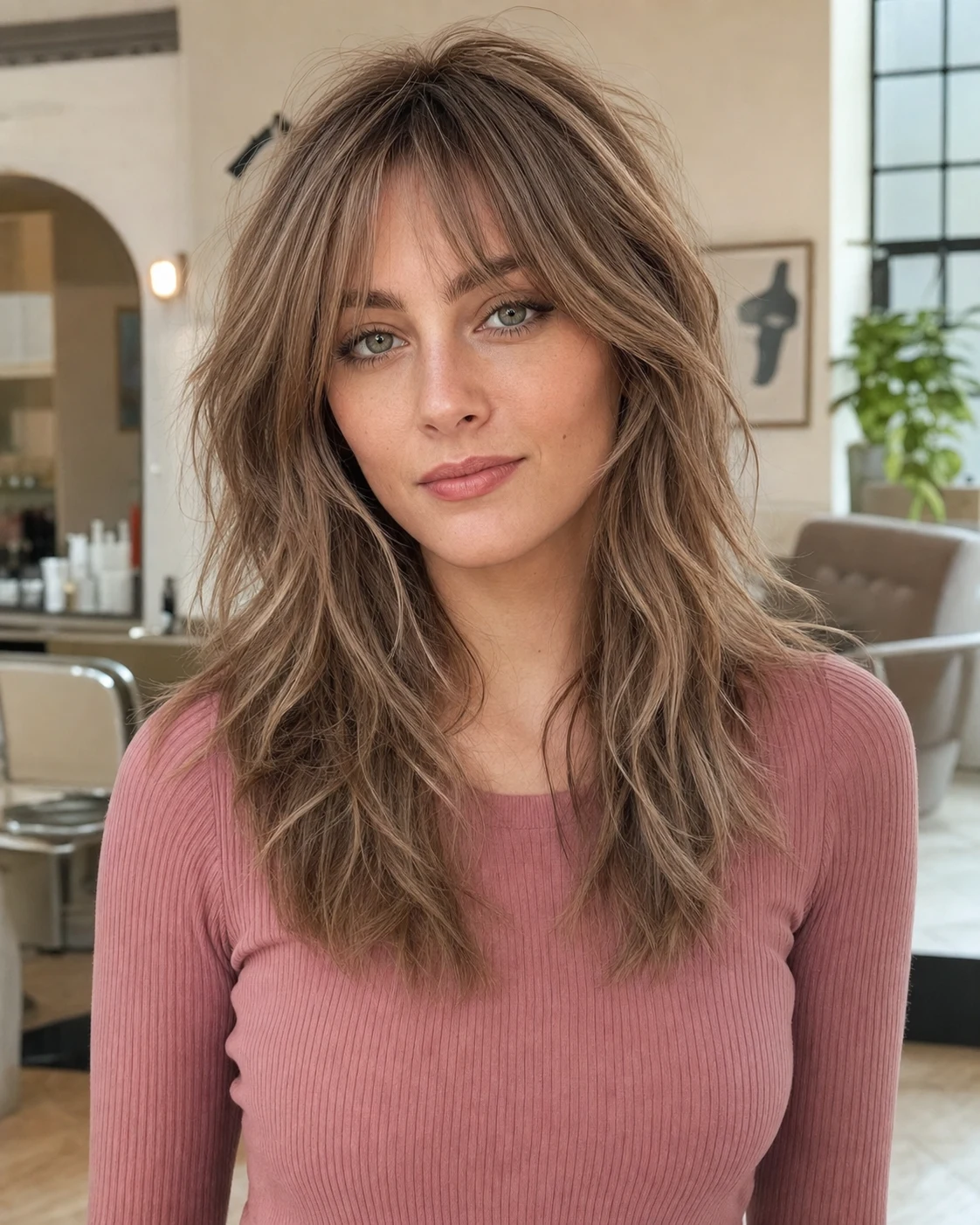
Movement through the shape, without a hard perimeter.
A soft shag uses layers to distribute movement through the haircut while keeping the overall contrast relatively gentle. Some references include a fringe; others use long framing pieces. Choose those details separately. You can want a layered outline without wanting short bangs or a heavily disconnected crown.
Show where the shortest layer starts and where you want visual volume to sit. A shag with height through the crown and one with fullness around the cheekbones are different requests. The shape should make sense with your natural pattern rather than depend on recreating the same curl in every section.
A medium-length shag may keep a ponytail while leaving short pieces loose around the front and crown. If that is inconvenient, demonstrate the exact tie-back you need. Ask whether the proposed short layers reach it, rather than assuming that keeping the total length solves the requirement.
Dense waves may make a layered shape look full with relatively little styling. Fine low-density hair can look more separated at the ends if too much weight is removed. Those are reasons to adjust the amount and position of layering, not reasons to apply the same rule to every strand pattern. Ask for the fuller and lighter versions side by side.
A softly tousled reference may still be a carefully styled image. Ask what it looks like air-dried and which section, if any, needs a reset. If you usually prefer a quiet surface, compare a subtle layered lob as well. You may enjoy movement without wanting the deliberately irregular edge of a shag.
Use a photo preview to explore where the volume sits while keeping color consistent. Check that the generated image does not invent a different curl pattern. A stylist can then decide how much of the pictured movement comes from a feasible cut, what depends on styling and what should be adapted for your density.
I want a connected, softly layered shag that uses my natural movement. Keep the fringe decision separate and protect enough of the shortest layers for this tie-back.
Give the silhouette a little practical context.
01↗Find a manageable shape for thick waves by comparing length, internal weight, front pieces and the routine you actually want to keep.
02↗Plan a wavy haircut around your natural dry pattern, mixed sections and shoulder contact, with a realistic first-week check.
 03↗
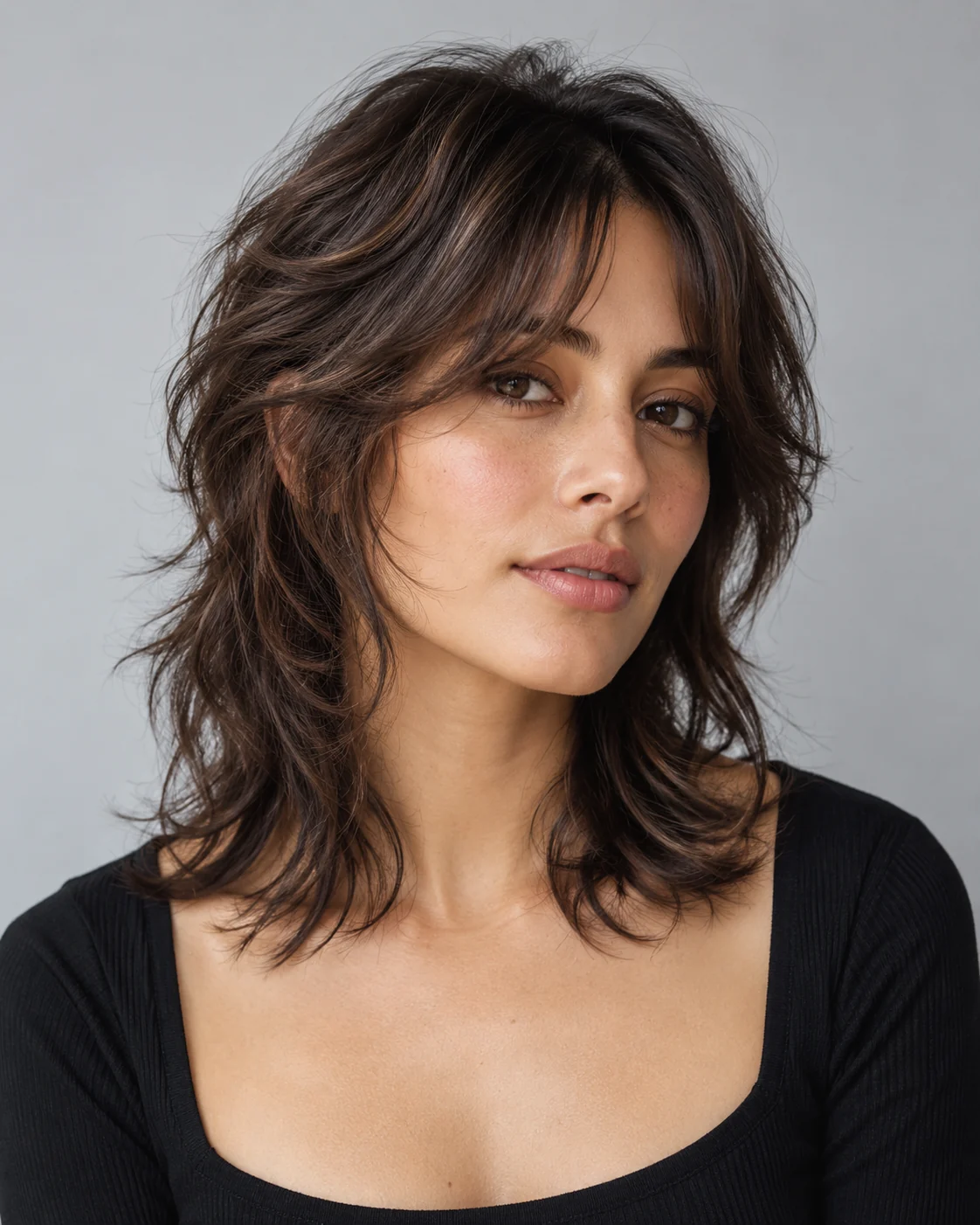
Compare a subtle wolf-inspired shape with a more dramatic cut, focusing on crown length, side volume, front framing and real styling effort.